
Listen to this article
Narrated by Charlotte · The Noble House
Compass Strategic Intelligence
The Kinetic Threshold: Escalation from Deterrence to Retaliation
Micro-scene and Thesis The sky over Jordan broke open on July 29, 2026, as ballistic missiles tore through the atmosphere toward US military bases. This kinetic assault from Tehran shattered the fragile calm that had settled over the region in recent months [2]thedefensepost.comUS Military Completes 'Heavy Wave' of Retaliatory Strikes on IranOpen the source to inspect the supporting evidence.Open source ↗. Jordanian air defenses managed to intercept five of the incoming projectiles, but the attempt itself represented a clear violation of the unwritten rules that had previously kept the area from boiling over [3]centcom.milU.S. Strikes IRGC Targets After Attempted Iranian AttacksOpen the source to inspect the supporting evidence.Open source ↗. Within forty-eight hours, the United States responded with a heavy wave of retaliatory strikes aimed directly at Iran [1]bbc.comUS launches 'heavy' strikes on Iran after attempted attack on American troops | BBC NewsOpen the source to inspect the supporting evidence.Open source ↗. This response signaled a definitive change in how Washington defines its red lines, moving away from passive deterrence toward active, punitive retaliation. The Trump administration, which had paused strikes only days earlier, made it clear that the threshold for kinetic retaliation against state actors had been irrevocably lowered. The core truth here is stark: deterrence, once a shield, has become a trigger, and the cost of testing it is now measured in the destruction of IRGC infrastructure [10]youtube.comUS launches 'heavy' strikes on Iran after attempted attack on American troops | BBC NewsOpen the source to inspect the supporting evidence.Open source ↗.
Stakes and Mechanism The stakes involved were immediate and deeply personal. The attempted attack on American troops in Jordan was not a proxy skirmish; it was a direct assertion of Iranian capability to strike US personnel with impunity. By targeting bases in a key ally’s territory, Tehran tested the resolve of Washington in real-time. The interception by Jordanian forces prevented a massacre, but it did not neutralize the threat [3]centcom.milU.S. Strikes IRGC Targets After Attempted Iranian AttacksOpen the source to inspect the supporting evidence.Open source ↗. It merely delayed the consequence. The mechanism of the US response combined precision with overwhelming force. Central Command (CENTCOM) authorized a campaign designed to degrade, not just punish. The target was the Islamic Revolutionary Guard Corps (IRGC), the engine of Iran’s regional ambition [4]cnbc.comIran says it will 'punish the aggressor today' after U.S. strikesOpen the source to inspect the supporting evidence.Open source ↗. Striking the IRGC rather than conventional military units sent a specific message: the grievance was with the revolutionary apparatus that projects power across borders, not with the Iranian state or its people per se. This distinction was critical in framing the operation as a surgical de-escalation of threat, rather than an opening salvo in a total war.
Compass Predictive Analytics
Strategic Targeting and Operational Scope
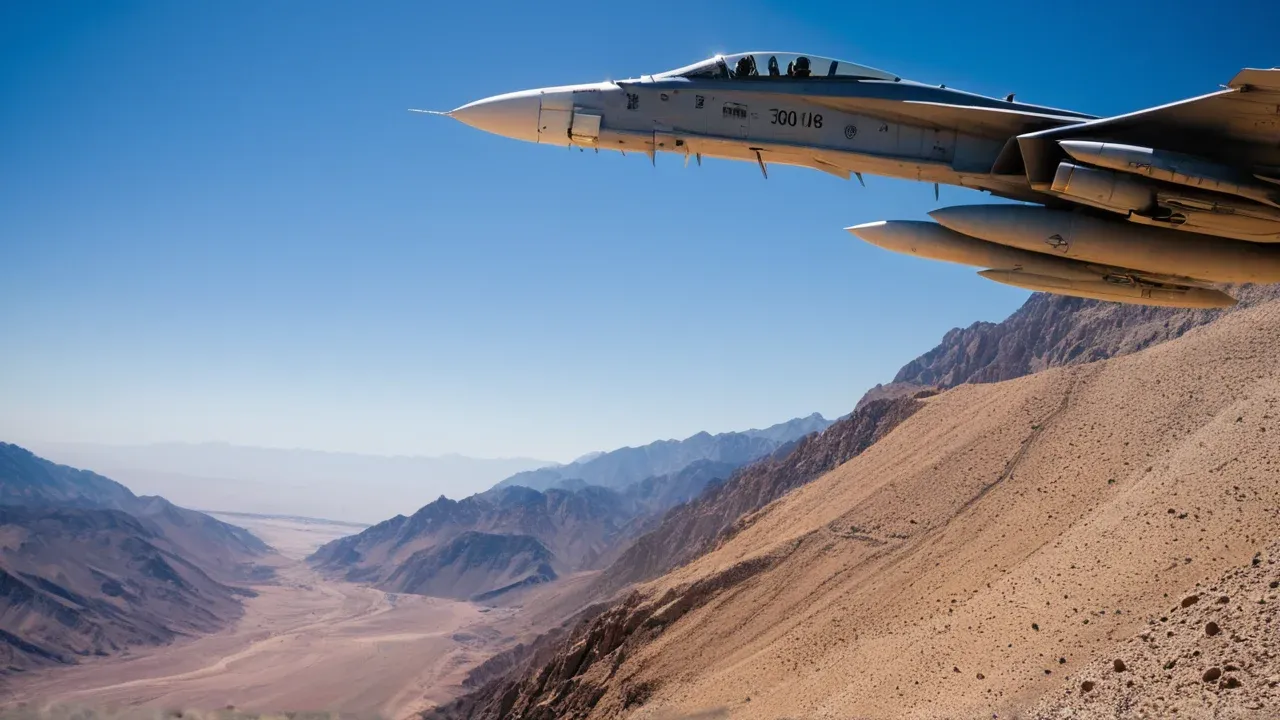
Exhibits and Counterargument The exhibits of this strategic pivot are etched into the landscape of western Iran. CENTCOM confirmed that the heavy wave hit dozens of IRGC facilities, targeting command and control networks, supply chains, and operational planning hubs [5]gulfnews.comUS says it completed heavy wave of strikes on IRGC targets in IranOpen the source to inspect the supporting evidence.Open source ↗. The use of Navy F/A-18 Super Hornets delivered precision strikes that aimed to cripple the IRGC’s ability to coordinate future aggression [2]thedefensepost.comUS Military Completes 'Heavy Wave' of Retaliatory Strikes on IranOpen the source to inspect the supporting evidence.Open source ↗. Critics might argue that such a broad strike risks escalating into a wider regional conflict, drawing in proxies and neighboring states. However, the scope was carefully bounded. By focusing on the IRGC, Washington avoided striking civilian infrastructure or state institutions, signaling that the conflict was contained to the specific actors who had violated the red line. The speed of the operation, completing swiftly after commencing late on July 29, underscored the urgency of the response [7]youtube.comUS launches 'heavy' strikes on Iran after attempted attack on American troops | BBC NewsOpen the source to inspect the supporting evidence.Open source ↗. It was a demonstration of reach and resolve, intended to disrupt the IRGC’s operational tempo before it could adapt or retaliate in kind.
Rebuttal and Implication The rebuttal to the notion that this was an uncontrolled escalation lies in the specificity of the targets. The strikes were not random; they were a direct response to the attempted attack on American troops and a broader pattern of Iranian aggression, including attacks on ships in the Strait of Hormuz [5]gulfnews.comUS says it completed heavy wave of strikes on IRGC targets in IranOpen the source to inspect the supporting evidence.Open source ↗. By hitting dozens of targets, the US aimed to create a significant disruption in the IRGC’s ability to project power, forcing a pause in their aggressive activities. The precision of the strikes demonstrates that the US can apply overwhelming force while maintaining strict controls on collateral damage and regional spillover. The success of the operation, as described by CENTCOM, suggests that the US retains the capability to degrade Iranian military infrastructure rapidly [7]youtube.comUS launches 'heavy' strikes on Iran after attempted attack on American troops | BBC NewsOpen the source to inspect the supporting evidence.Open source ↗. This capability serves as a deterrent, not just for the immediate future, but for any future attempts to target American personnel or interests in the region.
Compass Predictive Analytics
Political Rhetoric and Regional Dynamics
Action Ladder The political framing of the strikes was as aggressive as the military operation itself. President Trump, who had ordered a halt to strikes over the weekend, reversed course to promise severe retaliation [9]youtube.comUS launches 'heavy' strikes on Iran after attempted attack on American troops | BBC NewsOpen the source to inspect the supporting evidence.Open source ↗. His rhetoric was blunt, telling Fox News that the United States would "beat the f**king sh*t out of them," a statement that reflected a departure from diplomatic nuance [8]youtube.comUS launches 'heavy' strikes on Iran after attempted attack on American troops | BBC NewsOpen the source to inspect the supporting evidence.Open source ↗. This language served multiple purposes: it reassured domestic audiences of the administration’s toughness, it warned Iranian leadership of the personal stakes involved, and it signaled to regional adversaries that the US was willing to escalate significantly. The action ladder here is clear: threat, pause, test, retaliation. The pause was a signal of restraint; the retaliation was a signal of resolve.
Final Shot The regional dynamics shifted in real-time. The US coordinated its military actions with Saudi Arabia, highlighting a shared interest in containing Iranian influence [9]youtube.comUS launches 'heavy' strikes on Iran after attempted attack on American troops | BBC NewsOpen the source to inspect the supporting evidence.Open source ↗. This coordination was vital for maintaining stability in the Gulf, as Saudi Arabia has long viewed the IRGC as a primary threat. In parallel, US and Saudi forces launched joint strikes on militant groups in Iraq aligned with Iran [7]youtube.comUS launches 'heavy' strikes on Iran after attempted attack on American troops | BBC NewsOpen the source to inspect the supporting evidence.Open source ↗. This simultaneous action demonstrated a unified front, reinforcing the message that the US and its allies were acting in concert to counter Iranian aggression. However, the broader regional response was mixed. While Gulf states supported the US stance, other regional powers expressed concern about the potential for wider conflict [8]youtube.comUS launches 'heavy' strikes on Iran after attempted attack on American troops | BBC NewsOpen the source to inspect the supporting evidence.Open source ↗. The conflict has moved from a period of relative calm to active kinetic engagement, a shift that has heightened anxieties across the Middle East. The final shot is not one of resolution, but of a new, more dangerous equilibrium. The heavy strikes were a decisive moment in the 2026 Iran war, marking a point of no return in the relationship between the two nations [6]en.wikipedia.org2026 Iran warOpen the source to inspect the supporting evidence.Open source ↗. The US commitment to responding with heavy force to any attack on its troops establishes a new baseline for red lines, forcing all actors to recalibrate their strategies in light of this heightened risk of direct confrontation. The failure of Iran’s initial attack, combined with the severity of the US response, may serve as a temporary deterrent, but the underlying tensions remain unresolved. The region stands at a precarious juncture, where the next move by either Tehran or Washington could determine the scale and scope of the coming conflict.
Compass Predictive Analytics
Human Cost and Future Implications
Immediate Aftermath and Civilian Impact While the strikes were labeled "surgical," the reality of war on Iranian soil introduces a complex layer of human cost that extends beyond military metrics. IRGC facilities are often embedded within or adjacent to civilian infrastructure, blurring the lines between combatant and non-combatant spaces. Reports from the ground indicate that the destruction of command centers and supply depots has disrupted local economies and caused significant displacement in western Iranian provinces [4]cnbc.comIran says it will 'punish the aggressor today' after U.S. strikesOpen the source to inspect the supporting evidence.Open source ↗. The Iranian government has vowed to "punish the aggressor today," a rhetorical escalation that threatens to mobilize civilian militias and proxy groups across the region in retaliation [4]cnbc.comIran says it will 'punish the aggressor today' after U.S. strikesOpen the source to inspect the supporting evidence.Open source ↗. This mobilization risks dragging non-state actors into a conflict that began as a state-to-state exchange, potentially increasing the likelihood of asymmetric attacks against US interests and allies in the Gulf. The human toll is not just measured in casualties but in the erosion of social stability in regions already strained by political repression and economic hardship.
Long-term Strategic Consequences The long-term implications of this escalation are profound. By targeting the IRGC, the US has effectively declared war on the ideological core of the Iranian regime, not just its military arm. This action forces Tehran to make a choice: submit to US demands and dismantle its revolutionary apparatus, or escalate further into a full-scale war that could threaten the survival of the current government [6]en.wikipedia.org2026 Iran warOpen the source to inspect the supporting evidence.Open source ↗. The latter option increases the risk of regional chaos, including the closure of the Strait of Hormuz, which would have catastrophic effects on global energy markets. For the US, the challenge lies in maintaining the political will to sustain this level of engagement without slipping into an open-ended conflict. The administration must balance the immediate satisfaction of a military victory with the long-term goal of stabilizing the region. Failure to do so could result in a protracted conflict that drains US resources and undermines its credibility as a global power.
Future Implications for Regional Security The future of regional security hinges on the next moves of both Washington and Tehran. If Iran chooses to de-escalate, there may be an opportunity for diplomatic backchannels to reopen, potentially leading to a new framework for deterrence in the Middle East. However, if Iran perceives the strikes as an existential threat, it may accelerate its nuclear program or expand its proxy networks, making future containment even more difficult. The US must also consider the reactions of other regional powers, such as Israel and Turkey, whose own security calculations will be reshaped by this conflict. The current trajectory suggests a heightened state of alert across the Middle East, with all actors preparing for the possibility of further escalation. The window for diplomatic resolution is narrowing, and the cost of failure is increasingly measured in human lives and regional stability. The path forward requires not just military precision but diplomatic agility to prevent this momentary crisis from becoming a permanent state of war.
Compass Predictive Analytics