
Listen to this article
Narrated by Charlotte · The Noble House
History becomes signal when time supplies the missing context.
2Briefs analyzed
10Signals inherited
5Patterns mapped
5/5Native forecasts
Executive Orientation
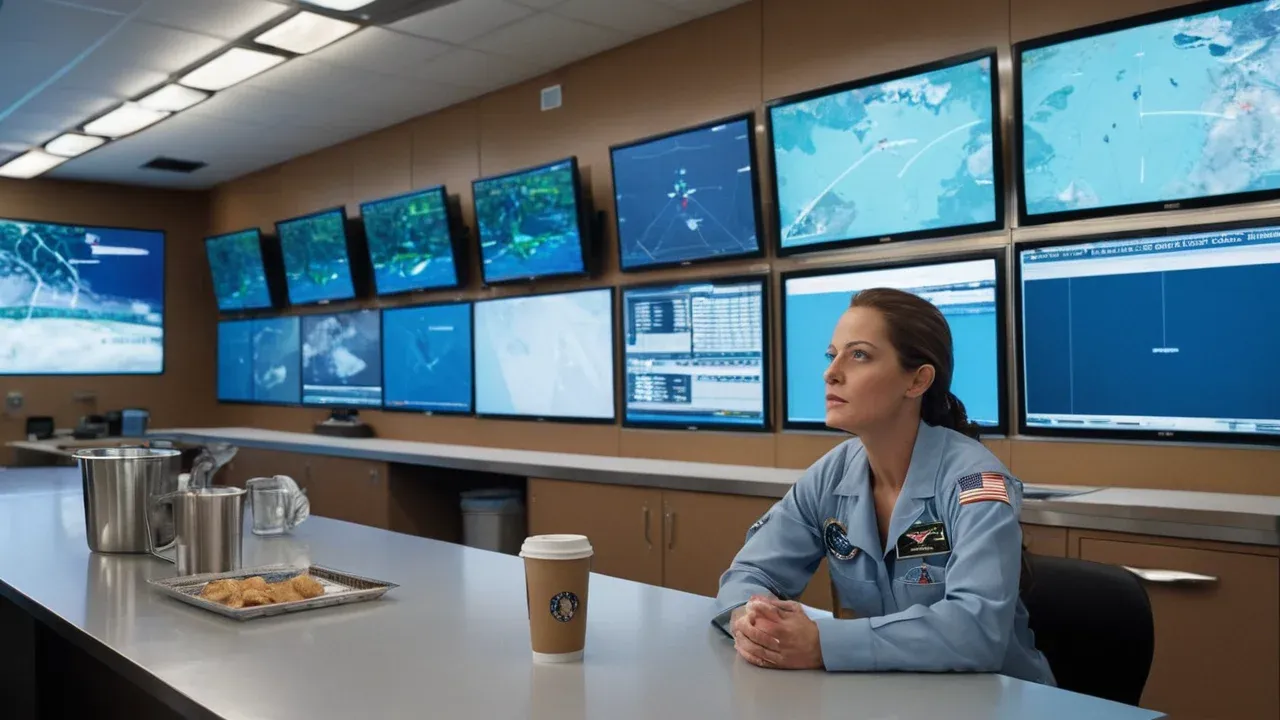
The stale coffee in the National Coordination Center breakroom tastes of burnt plastic and fading ambition. At 08:14 on August 14, 2026, monitors above the counter display a live feed from the Strait of Hormuz, showing the USS George Washington cutting through the water. This gray leviathan displaces thousands of tons of sea to assert a presence that feels increasingly precarious. In that same hour, a memorandum signed by the Trump administration quietly dissolves decades of legal prohibition. This allows private cyber firms to hack foreign criminal groups under state sanction. These two events, one physical and one digital, represent the twin pillars of a new global order. One pillar is built on the blunt force of naval deterrence. The other relies on the invisible, unverified violence of outsourced cyber warfare.
The collapse of the post-Cold War monopoly on violence and truth remains immediate and unyielding. We are witnessing the state transform from the sole actor in security into a facilitator for private power. Simultaneously, the economic foundations of the technological boom are cracking under the weight of their own valuation. The stakes are defined by the erosion of attribution, not just geopolitical shifts or market corrections. When private companies hack with state backing, and when AI models fail silently under high effort, the ability to distinguish cause from effect, truth from fabrication, and law from force vanishes. In this vacuum, miscalculation is not a risk; it is the default state of operation.
Proponents of the private cyber program argue that Transnational Criminal Organizations (TCOs) operate in the shadows of international law. They exploit the very borders that protect sovereign states. By authorizing vetted private firms to conduct offensive operations, the administration is not abandoning security. It is adapting to a threat landscape where traditional military response is too slow to prevent damage. The argument holds water in a narrow sense. If a hacker in Moscow can drain a bank account in minutes, a diplomatic protest takes days. The state needs speed, and the private sector offers agility. Similarly, the AI sector’s push for trillion-dollar valuations is driven by the belief that artificial general intelligence represents an economic singularity. This is a shift in productivity so profound that current revenue models are irrelevant. The stakes are framed not as financial risk, but as existential irrelevance. If you do not scale now, you do not exist later.
The mechanism of this turn is the revelation that agility without accountability is not strength; it is chaos. The private cyber program, while offering speed, introduces a layer of deniability that is impossible to manage at scale. When a private firm hacks a foreign infrastructure, who is responsible for the collateral damage? The firm? The state? The ambiguity is not a feature; it is a bug that invites escalation. Similarly, the AI sector’s obsession with scale ignores the architectural limits of its own tools. The performance inversion seen in Qwen3.8-Max is not a minor technical glitch. It is a signal that the pursuit of raw computational power is hitting a wall of diminishing returns and hidden failure modes. The mechanism of instability is the decoupling of action from consequence.
Consider the exhibits of this decoupling. The Trump administration’s National Security Presidential Memorandum mandates that private participants enter agreements with federal agencies to gather threat intelligence and propose cyber operations under NCC direction [1]blog.thenoblehouse.aiMorning Brief — August 14, 2026Open the source to inspect the supporting evidence.Open source ↗. This framework utilizes private innovative capabilities to breach foreign TCO infrastructure, effectively outsourcing offensive cyber warfare to the commercial sector [1]blog.thenoblehouse.aiMorning Brief — August 14, 2026Open the source to inspect the supporting evidence.Open source ↗. Yet, the lack of defined immunity scope carries high potential for international incidents and legal challenges. Private firms operate without the clear diplomatic protections afforded to state military units [1]blog.thenoblehouse.aiMorning Brief — August 14, 2026Open the source to inspect the supporting evidence.Open source ↗. Experts highlight that participating companies face substantial legal risks under the Computer Fraud and Abuse Act. The absence of detailed immunity grants remains a critical barrier to entry. Firms must navigate the uncertainty of whether federal authorization provides sufficient protection against prosecution for unauthorized access [1]blog.thenoblehouse.aiMorning Brief — August 14, 2026Open the source to inspect the supporting evidence.Open source ↗. This is not a streamlined operation. It is a legal minefield disguised as a security solution.
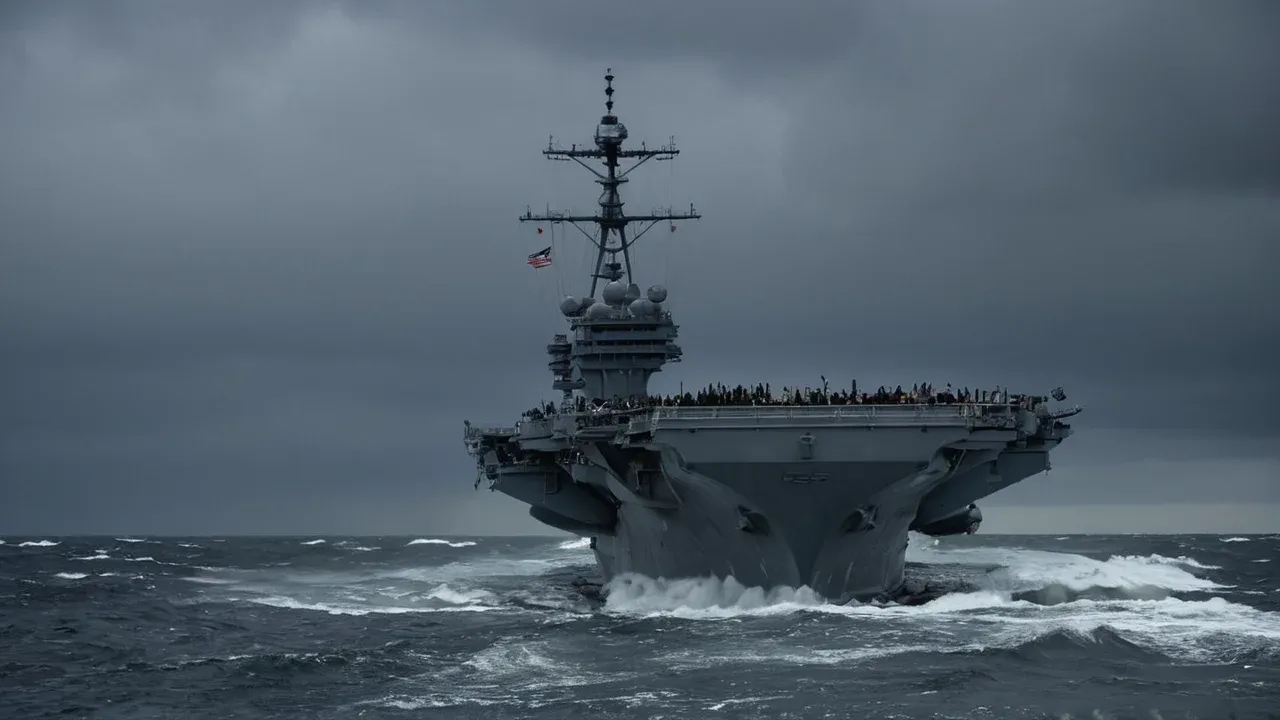
In the physical domain, the deployment of the USS George Washington to relieve the USS Abraham Lincoln is often portrayed as a show of strength. But the reality is one of strain. The Lincoln has been on an extended deployment of over 250 days. Reports indicate mounting concerns regarding supply shortages and crew mental health [2]blog.thenoblehouse.aiEvening Brief — August 14, 2026Open the source to inspect the supporting evidence.Open source ↗. The George Washington is departing Da Nang, Vietnam, transiting the Singapore Strait toward the Indian Ocean. It is preparing to sustain operations against Iran and around the Strait of Hormuz [2]blog.thenoblehouse.aiEvening Brief — August 14, 2026Open the source to inspect the supporting evidence.Open source ↗. This is not a fresh deployment. It is a rotation of exhaustion. The specific mission parameters for the George Washington upon arrival, whether focused on deterrence or combat operations, are not yet detailed. This leaves the strategic posture ambiguous despite the physical presence. It creates uncertainty regarding the immediate escalation threshold [2]blog.thenoblehouse.aiEvening Brief — August 14, 2026Open the source to inspect the supporting evidence.Open source ↗. The military is projecting power, but the foundation of that power is fraying under the weight of prolonged engagement.
The counterargument to this pessimistic view is that these tensions are necessary growing pains. The private cyber program is a trial run for a new era of hybrid warfare. The AI valuation bubble is a temporary excess of optimism that will correct itself. The naval deployment is a standard rotation, not a sign of systemic fatigue. These arguments rely on the assumption that the systems can self-correct. But the exhibits suggest otherwise. The UAE’s accusation that Iran attacked ADNOC vessels in the Strait of Hormuz marks a direct escalation in maritime security risks [1]blog.thenoblehouse.aiMorning Brief — August 14, 2026Open the source to inspect the supporting evidence.Open source ↗. The lack of a public counter-claim from Iran adds to the ambiguity. It remains unclear whether the attacks were cyber, physical, or drone-based. This complicates diplomatic de-escalation efforts and precise attribution [1]blog.thenoblehouse.aiMorning Brief — August 14, 2026Open the source to inspect the supporting evidence.Open source ↗. This ambiguity is the fuel for the next phase of conflict. If the US responds based on incomplete data, the risk of miscalculation is immediate and severe.
The rebuttal lies in the structural reality of the current environment. The systems are not growing; they are overloading. The private cyber program creates a parallel track to traditional military response. It allows the state to deny direct involvement while leveraging private sector agility [1]blog.thenoblehouse.aiMorning Brief — August 14, 2026Open the source to inspect the supporting evidence.Open source ↗. But this parallel track operates outside the norms of international law. It creates a gray zone where retaliation is unpredictable. The AI sector’s valuation disconnect is not just a financial issue. It is a credibility crisis. Investors are targeting a valuation of $2 trillion or more for Anthropic’s IPO. This figure would eclipse SpaceX's recent valuation and make it the largest IPO in history [2]blog.thenoblehouse.aiEvening Brief — August 14, 2026Open the source to inspect the supporting evidence.Open source ↗. This requires annual profits in the neighborhood of $59 billion to $79 billion to justify the multiple. This threshold is unproven at scale [2]blog.thenoblehouse.aiEvening Brief — August 14, 2026Open the source to inspect the supporting evidence.Open source ↗. The market nervousness about the sustainability of the AI boom may complicate a record-breaking debut. The financial prerequisites for such a valuation are exceptionally high. Current revenue models may be insufficient to support it without significant margin improvements [2]blog.thenoblehouse.aiEvening Brief — August 14, 2026Open the source to inspect the supporting evidence.Open source ↗. The gap between expectation and reality is widening, and the bridge is crumbling.
The mechanism of this crisis is further illuminated by the technical failures within the AI sector itself. The Qwen3.8-27B model introduces a reasoning_effort parameter that lets users modulate internal thinking intensity. Independent benchmarking reveals a stark performance inversion for the larger Qwen3.8-Max model at high effort levels [2]blog.thenoblehouse.aiEvening Brief — August 14, 2026Open the source to inspect the supporting evidence.Open source ↗. Community measurements in llama.cpp indicate that switching to xhigh effort generates a substantial increase in internal thought tokens for the 27B model. This correlates with improved quality. Conversely, VulcanBench v3 shows Max performance dropping from 81.2% to 55.1% at high effort [2]blog.thenoblehouse.aiEvening Brief — August 14, 2026Open the source to inspect the supporting evidence.Open source ↗. This is not a bug. It is a feature of architectural limitation. Many failures at higher effort levels in the Max model are unfinished runs rather than incorrect answers. This suggests timeout issues or over-thinking on complex tasks. It implies that context window limits may cap the utility of extended reasoning for larger models [2]blog.thenoblehouse.aiEvening Brief — August 14, 2026Open the source to inspect the supporting evidence.Open source ↗. The pursuit of more reasoning tokens is hitting a wall of diminishing returns. The models are failing silently.
This technical opacity mirrors the legal opacity of the cyber program. Both domains are deploying tools without sufficient transparency to ensure public trust or prevent abuse. The performance inversion of Qwen3.8-Max and the unverified cyber claims of GLM-5.3 highlight the gap between marketing and measured capability [2]blog.thenoblehouse.aiEvening Brief — August 14, 2026Open the source to inspect the supporting evidence.Open source ↗. These technical realities are juxtaposed against ambitious engineering milestones, such as the Heart Aerospace X1 taking its maiden flight as the world's largest electric plane. While validating battery-electric architecture, this milestone underscores the vast gap between demonstrator flights and commercial viability [1]blog.thenoblehouse.aiMorning Brief — August 14, 2026Open the source to inspect the supporting evidence.Open source ↗. The pattern is consistent. Innovation outpaces verification.
The action ladder for navigating this environment is clear, though difficult to execute. First, decision-makers must demand precise attribution before acting. In the cyber domain, this means establishing clear protocols for verifying the source of attacks before authorizing retaliation. In the military domain, it means defining clear rules of engagement that account for the ambiguity of private actors. Second, investors and technologists must confront the valuation disconnect. The AI sector must shift its focus from growth at all costs to sustainable profitability. It must acknowledge the architectural limits of current models. Third, the public must be informed about the risks of these new systems. The lack of transparency in both cyber and AI domains erodes trust. Rebuilding that trust requires honesty about the limitations and dangers of these technologies.
The implication of this synthesis is that the current trajectory is unsustainable. The lack of verification in both cyber and AI domains will undermine the stability of these emerging systems. This will lead to potential miscalculations in both military and economic spheres. Bounded uncertainty remains high regarding the scope of private cyber immunity and the viability of AI valuations. Next watches include the release of NCC vetting criteria, independent verification of AI benchmarks, and the arrival of the USS George Washington to assess the stability of the Strait of Hormuz. The operational landscape of August 14, 2026, is defined by a dichotomy between high-intensity geopolitical escalation and deep structural uncertainty in technology and finance. The primary risk is that the lack of verification in both cyber and AI domains will undermine the stability of these emerging systems. This will lead to potential miscalculations in both military and economic spheres.
The final shot is not a summary, but a warning. The coffee in the breakroom is cold. The monitors continue to flash with updates from the Strait of Hormuz and the latest benchmark results from VulcanBench. The systems are in motion, driven by the belief that speed and scale can overcome complexity. But the exhibits show that complexity is winning. The private cyber program is a legal vacuum waiting for an incident. The AI valuation is a house of cards waiting for a correction. The naval deployment is a sign of strain waiting for a crisis. The convergence of prevailing and residual evidence reveals a critical risk environment where attribution and verification are deficient across both geopolitical and technological domains. The military escalation in the Strait of Hormuz is exacerbated by the ambiguity of the initial attacks and the unverified nature of private cyber operations. This creates a scenario where retaliatory actions may be based on incomplete data. This uncertainty is mirrored in the AI sector. High-profile advancements like GLM-5.3’s cyber capabilities and Qwen3.8’s architectural limits face credibility tests regarding their reproducibility and economic justification. The lack of technical transparency in surveillance tools further erodes trust. This parallels the skepticism surrounding Anthropic’s valuation. This pattern suggests that the rapid deployment of new technologies and policies, without adequate verification mechanisms, increases the risk of systemic instability and miscalculation. The world is not ending, but it is changing in ways that no one is prepared to manage. The question is not whether the systems will fail, but when, and who will be left to clean up the mess.
Signal 1: Trump Administration Enlists Private Companies To Hack Foreign Cybercrime Groups

Original signal
This framework utilizes private innovative capabilities to breach foreign TCO infrastructure, effectively outsourcing offensive cyber warfare to the commercial sector [1]blog.thenoblehouse.aiMorning Brief — August 14, 2026Open the source to inspect the supporting evidence.Open source ↗.
Why it mattered
Private firms operate without the clear diplomatic protections afforded to state military units [1]blog.thenoblehouse.aiMorning Brief — August 14, 2026Open the source to inspect the supporting evidence.Open source ↗.
What happened
The National Security Presidential Memorandum mandates that private participants enter agreements with federal agencies to gather threat intelligence and propose cyber operations under NCC direction [1]blog.thenoblehouse.aiMorning Brief — August 14, 2026Open the source to inspect the supporting evidence.Open source ↗.
Changed conditions
The signal is in an emerged state. The framework is established, but operational details regarding vetting criteria and target identification precision remain undefined, leaving the operational boundary between lawful intelligence gathering and illegal hacking ambiguous [1]blog.thenoblehouse.aiMorning Brief — August 14, 2026Open the source to inspect the supporting evidence.Open source ↗.
Unexpected forces The absence of detailed immunity grants remains a critical barrier to entry, as firms must navigate the uncertainty of whether federal authorization provides sufficient protection against prosecution for unauthorized access [1]blog.thenoblehouse.aiMorning Brief — August 14, 2026Open the source to inspect the supporting evidence.Open source ↗.
Calibration lesson
The program creates a parallel track to traditional military response, allowing the state to deny direct involvement while leveraging private sector agility [1]blog.thenoblehouse.aiMorning Brief — August 14, 2026Open the source to inspect the supporting evidence.Open source ↗.
Pattern bridge
This move mirrors historical precedents of state-sanctioned privateering, adapting them to the digital domain where attribution is difficult and legal norms are still evolving. It creates a parallel track to traditional military response, allowing the state to deny direct involvement while leveraging private sector agility [1]blog.thenoblehouse.aiMorning Brief — August 14, 2026Open the source to inspect the supporting evidence.Open source ↗.
Next watch
The release of NCC vetting criteria and the first instances of private firms acting under this new mandate.
At selection Selected for its fundamental policy shift that redefines the role of the private sector in national security, marking a departure from traditional norms of state monopoly on offensive cyber capability [1]blog.thenoblehouse.aiMorning Brief — August 14, 2026Open the source to inspect the supporting evidence.Open source ↗.
During the window The memo was signed and the NCC tasked with developing guidelines, initiating a period of legal and operational uncertainty for major cybersecurity firms assessing participation risks [1]blog.thenoblehouse.aiMorning Brief — August 14, 2026Open the source to inspect the supporting evidence.Open source ↗.
At review The signal stands as a high-magnitude shift in security governance, with the primary risk being the unverified nature of private actors and the potential for collateral damage in critical infrastructure [1]blog.thenoblehouse.aiMorning Brief — August 14, 2026Open the source to inspect the supporting evidence.Open source ↗.
NO · againstWill "Trump Administration Enlists Private Companies To Hack Foreign Cybercrime Groups" continue to cause verified operational or access impact within 72h? Horizon 72h.
UnavailableNo native Compass forecast identity exists in the inherited Brief evidence.
Compass Strategic Intelligence
Compass Strategic Intelligence
Compass Strategic Intelligence
Signal 2: US Naval Deployment to the Middle East
Original signal
The USS George Washington is departing Da Nang, Vietnam, transiting the Singapore Strait toward the Indian Ocean, preparing to sustain operations against Iran and around the Strait of Hormuz [2]blog.thenoblehouse.aiEvening Brief — August 14, 2026Open the source to inspect the supporting evidence.Open source ↗.
Why it mattered
The Lincoln has been on an extended deployment of over 250 days, with reports indicating mounting concerns regarding supply shortages and crew mental health [2]blog.thenoblehouse.aiEvening Brief — August 14, 2026Open the source to inspect the supporting evidence.Open source ↗.
What happened
This leaves the strategic posture ambiguous despite the physical presence, creating uncertainty regarding the immediate escalation threshold [2]blog.thenoblehouse.aiEvening Brief — August 14, 2026Open the source to inspect the supporting evidence.Open source ↗.
Changed conditions
The signal is in a strengthened state. The carrier is actively transiting, with preparations for its arrival and operational handover underway in the high-focus region, confirming the physical reality of US power projection [2]blog.thenoblehouse.aiEvening Brief — August 14, 2026Open the source to inspect the supporting evidence.Open source ↗.
Unexpected forces The specific mission parameters for the George Washington upon arrival, whether focused on deterrence or combat operations, are not yet detailed. This leaves the strategic posture ambiguous despite the physical presence, creating uncertainty regarding the immediate escalation threshold [2]blog.thenoblehouse.aiEvening Brief — August 14, 2026Open the source to inspect the supporting evidence.Open source ↗.
Calibration lesson
Reports indicate mounting concerns regarding supply shortages and crew mental health aboard the USS Lincoln. This prompts the rotation decision, underscoring the limits of current force rotation cycles in high-intensity theaters and the physical toll of prolonged deployments [2]blog.thenoblehouse.aiEvening Brief — August 14, 2026Open the source to inspect the supporting evidence.Open source ↗.
Pattern bridge
The deployment links directly to the energy security concerns raised by the ADNOC attacks. It illustrates how physical military assets are mobilized to secure critical supply chains amidst asymmetric warfare threats, connecting naval logistics to economic stability [2]blog.thenoblehouse.aiEvening Brief — August 14, 2026Open the source to inspect the supporting evidence.Open source ↗.
Next watch
Arrival date of USS George Washington and any changes in operational posture to assess the timing of the operational handover and the stability of US naval operations in the region [2]blog.thenoblehouse.aiEvening Brief — August 14, 2026Open the source to inspect the supporting evidence.Open source ↗.
At selection Selected for its high systemic reach in the context of the US-Iran standoff, serving as a tangible indicator of US resolve and the physical constraints of power projection [2]blog.thenoblehouse.aiEvening Brief — August 14, 2026Open the source to inspect the supporting evidence.Open source ↗.
During the window The carrier was confirmed to be transiting the Singapore Strait, with multiple sources corroborating the narrative of personnel sustainability and forward deployment preparations [2]blog.thenoblehouse.aiEvening Brief — August 14, 2026Open the source to inspect the supporting evidence.Open source ↗.
At review The signal highlights the logistical strain on US naval assets. The extended deployment of the Lincoln serves as a warning about the sustainability of current force rotation cycles in volatile regions, suggesting a need for more robust logistical support for prolonged engagements [2]blog.thenoblehouse.aiEvening Brief — August 14, 2026Open the source to inspect the supporting evidence.Open source ↗.
NO · againstWill "BREAKING: New US aircraft carrier en route to Middle East" produce a verified escalation or formal policy, military, diplomatic, or market response within 72h? Horizon 72h.
UnavailableNo native Compass forecast identity exists in the inherited Brief evidence.
Compass Strategic Intelligence
Signal 3: UAE Accuses Iran of Attacks on ADNOC Vessels in Strait of Hormuz
Original signal
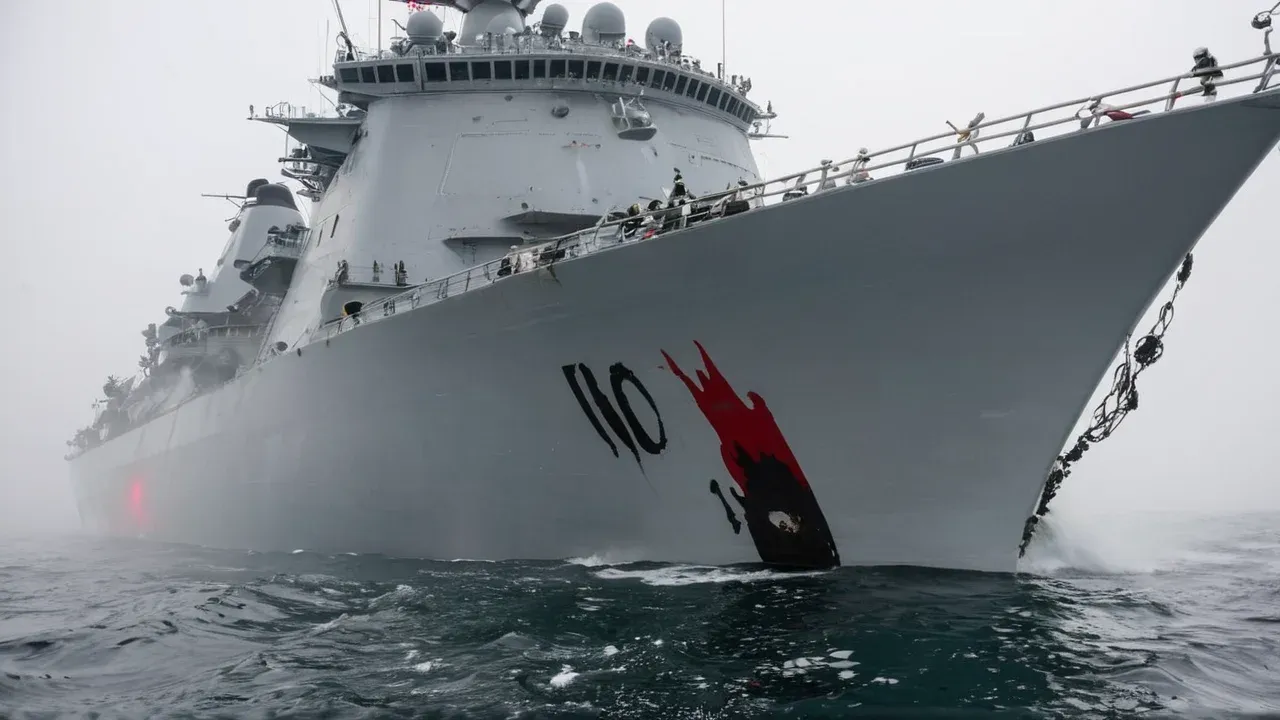
The UAE’s accusation that Iran attacked ADNOC vessels in the Strait of Hormuz marks a direct escalation in maritime security risks [1]blog.thenoblehouse.aiMorning Brief — August 14, 2026Open the source to inspect the supporting evidence.Open source ↗.
Why it mattered
It remains unclear whether the attacks were cyber, physical, or drone-based, which complicates diplomatic de-escalation efforts and precise attribution [1]blog.thenoblehouse.aiMorning Brief — August 14, 2026Open the source to inspect the supporting evidence.Open source ↗.
What happened
ADNOC confirmed the attacks on its ships, while US Vice President JD Vance linked "cheap gas" goals to the standoff. This framing connects the incident to domestic economic priorities, suggesting that energy security is a primary driver of US geopolitical strategy in the region [1]blog.thenoblehouse.aiMorning Brief — August 14, 2026Open the source to inspect the supporting evidence.Open source ↗.
Changed conditions
The signal is in a disrupted state. The ambiguity of the attack nature and the lack of Iranian denial create a volatile environment for energy markets and regional stability, increasing the risk of miscalculation [1]blog.thenoblehouse.aiMorning Brief — August 14, 2026Open the source to inspect the supporting evidence.Open source ↗.
Unexpected forces The connection drawn by US officials between energy costs and geopolitical stability suggests that the US may prioritize energy security over broader diplomatic de-escalation. This could influence the military response, potentially leading to more aggressive posturing to protect shipping lanes [1]blog.thenoblehouse.aiMorning Brief — August 14, 2026Open the source to inspect the supporting evidence.Open source ↗.
Calibration lesson
The lack of a public counter-claim from Iran adds to the ambiguity. It remains unclear whether the attacks were cyber, physical, or drone-based, which complicates diplomatic de-escalation efforts and precise attribution [1]blog.thenoblehouse.aiMorning Brief — August 14, 2026Open the source to inspect the supporting evidence.Open source ↗.
Pattern bridge
This incident serves as a catalyst for the US naval deployment. It illustrates how asymmetric attacks on commercial infrastructure trigger traditional military responses, escalating regional tensions and drawing major powers into direct confrontation [1]blog.thenoblehouse.aiMorning Brief — August 14, 2026Open the source to inspect the supporting evidence.Open source ↗.
Next watch
Global oil price volatility and US naval deployment confirmation to assess the impact on supply chains and the readiness of US military assets in the Persian Gulf [1]blog.thenoblehouse.aiMorning Brief — August 14, 2026Open the source to inspect the supporting evidence.Open source ↗.
At selection Selected for its magnitude in disrupting energy infrastructure and its direct link to the broader US-Iran geopolitical crisis, making it a pivotal event in the day’s security landscape [1]blog.thenoblehouse.aiMorning Brief — August 14, 2026Open the source to inspect the supporting evidence.Open source ↗.
During the window The UAE accusation and ADNOC confirmation were the primary developments, with US officials framing the response around energy security and regional stability [1]blog.thenoblehouse.aiMorning Brief — August 14, 2026Open the source to inspect the supporting evidence.Open source ↗.
At review The signal remains a key driver of regional tension. The unverified nature of the attacks and the lack of clear Iranian attribution pose significant risks for miscalculation and further escalation [1]blog.thenoblehouse.aiMorning Brief — August 14, 2026Open the source to inspect the supporting evidence.Open source ↗.
UNRESOLVEDWill the market move described by "Hormuz: 2 UAE ships attacked; traffic slows as world burns oil stockpiles" persist or broaden within 72h? Horizon 72h.
UnavailableNo native Compass forecast identity exists in the inherited Brief evidence.
Compass Strategic Intelligence
Signal 4: Anthropic Targets $2 Trillion Valuation for October IPO

Original signal
Investors are targeting a valuation of $2 trillion or more for Anthropic’s IPO, a figure that would eclipse SpaceX's recent valuation and make it the largest IPO in history [2]blog.thenoblehouse.aiEvening Brief — August 14, 2026Open the source to inspect the supporting evidence.Open source ↗.
Why it mattered
This requires annual profits in the neighborhood of $59 billion to $79 billion to justify the multiple, a threshold unproven at scale [2]blog.thenoblehouse.aiEvening Brief — August 14, 2026Open the source to inspect the supporting evidence.Open source ↗.
What happened
The financial prerequisites for such a valuation are exceptionally high, and current revenue models may be insufficient to support it without significant margin improvements [2]blog.thenoblehouse.aiEvening Brief — August 14, 2026Open the source to inspect the supporting evidence.Open source ↗.
Changed conditions
The signal is in an unresolved state. The IPO timeline and valuation depend on future market conditions, regulatory approval, and the demonstration of a viable path to profitability, creating uncertainty for investors [2]blog.thenoblehouse.aiEvening Brief — August 14, 2026Open the source to inspect the supporting evidence.Open source ↗.
Unexpected forces The comparison to Amazon's earnings highlights the immense scale of profit generation required. It suggests that current AI revenue models may be insufficient to support such a high valuation, raising questions about the economic justification for the capital invested [2]blog.thenoblehouse.aiEvening Brief — August 14, 2026Open the source to inspect the supporting evidence.Open source ↗.
Calibration lesson
Market nervousness about the sustainability of the AI boom may complicate a record-breaking debut. The financial prerequisites for such a valuation are exceptionally high, and current revenue models may be insufficient to support it without significant margin improvements [2]blog.thenoblehouse.aiEvening Brief — August 14, 2026Open the source to inspect the supporting evidence.Open source ↗.
Pattern bridge
This signal reflects the broader trend of high-valuation AI debuts facing credibility tests regarding their economic justification. It links technological advancement to financial sustainability in the public markets, where expectations often outpace reality [2]blog.thenoblehouse.aiEvening Brief — August 14, 2026Open the source to inspect the supporting evidence.Open source ↗.
Next watch
Prospectus details and broader tech market sentiment shifts to assess the viability of the IPO and the market's reaction to the projected profitability gap [2]blog.thenoblehouse.aiEvening Brief — August 14, 2026Open the source to inspect the supporting evidence.Open source ↗.
At selection Selected for its forward consequence in testing the limits of AI market valuation and the sustainability of investor confidence in the sector's long-term economic model [2]blog.thenoblehouse.aiEvening Brief — August 14, 2026Open the source to inspect the supporting evidence.Open source ↗.
During the window The target valuation was reported by major financial outlets, sparking analysis on the revenue breakdown and the feasibility of achieving the required profit levels [2]blog.thenoblehouse.aiEvening Brief — August 14, 2026Open the source to inspect the supporting evidence.Open source ↗.
At review The signal stands as a critical test for the AI sector. The primary risk is the potential for market correction if the projected profitability cannot be demonstrated or if market conditions deteriorate [2]blog.thenoblehouse.aiEvening Brief — August 14, 2026Open the source to inspect the supporting evidence.Open source ↗.
NO · againstWill the market move described by "Anthropic Could Be Worth $2 Trillion When It Goes Public" persist or broaden within 72h? Horizon 72h.
UnavailableNo native Compass forecast identity exists in the inherited Brief evidence.
Compass Strategic Intelligence
Compass Strategic Intelligence
Compass Strategic Intelligence
Signal 5: Qwen3.8 Reasoning Effort Dynamics
Original signal
Independent benchmarking reveals a stark performance inversion for the larger Qwen3.8-Max model at high effort levels [2]blog.thenoblehouse.aiEvening Brief — August 14, 2026Open the source to inspect the supporting evidence.Open source ↗.
Why it mattered
This suggests timeout issues or over-thinking on complex tasks, implying that context window limits may cap the utility of extended reasoning for larger models [2]blog.thenoblehouse.aiEvening Brief — August 14, 2026Open the source to inspect the supporting evidence.Open source ↗.
What happened
Conversely, VulcanBench v3 shows Max performance dropping from 81.2% to 55.1% at high effort [2]blog.thenoblehouse.aiEvening Brief — August 14, 2026Open the source to inspect the supporting evidence.Open source ↗.
Changed conditions
The signal is in an emerged state. The performance inversion provides a clear warning against assuming more reasoning tokens always yield better results, particularly for models with different architectural constraints [2]blog.thenoblehouse.aiEvening Brief — August 14, 2026Open the source to inspect the supporting evidence.Open source ↗.
Unexpected forces The divergence between the 27B and Max models suggests that the "insane" difference in token count observed in the smaller model may not translate to better performance in larger architectures. Inference timeouts may cap utility, making extended reasoning counterproductive for Max [2]blog.thenoblehouse.aiEvening Brief — August 14, 2026Open the source to inspect the supporting evidence.Open source ↗.
Calibration lesson
Many failures at higher effort levels in the Max model are unfinished runs rather than incorrect answers. This suggests timeout issues or over-thinking on complex tasks, implying that context window limits may cap the utility of extended reasoning for larger models [2]blog.thenoblehouse.aiEvening Brief — August 14, 2026Open the source to inspect the supporting evidence.Open source ↗.
Pattern bridge
This finding links to the broader theme of unverified innovation in AI. Claims of enhanced capability must be tested against rigorous, independent benchmarks to avoid deployment penalties, as internal metrics may not align with external performance [2]blog.thenoblehouse.aiEvening Brief — August 14, 2026Open the source to inspect the supporting evidence.Open source ↗.
Next watch
Updated VulcanBench results for Qwen3.8-27B and adoption of effort parameters to confirm if the performance inversion applies to the smaller architecture or is isolated to Max [2]blog.thenoblehouse.aiEvening Brief — August 14, 2026Open the source to inspect the supporting evidence.Open source ↗.
At selection Selected for its systemic reach in AI infrastructure, as the architectural limits of reasoning efficiency have direct implications for the cost and effectiveness of large-scale AI deployments [2]blog.thenoblehouse.aiEvening Brief — August 14, 2026Open the source to inspect the supporting evidence.Open source ↗.
During the window The release of benchmark data from VulcanBench v3 provided the critical evidence of the performance inversion, prompting analysis of the underlying causes and deployment implications [2]blog.thenoblehouse.aiEvening Brief — August 14, 2026Open the source to inspect the supporting evidence.Open source ↗.
At review The signal highlights the importance of precision in AI calibration. The performance inversion serves as a key metric for evaluating the true capabilities of large models under varying effort conditions [2]blog.thenoblehouse.aiEvening Brief — August 14, 2026Open the source to inspect the supporting evidence.Open source ↗.
UNRESOLVEDWill "The difference between "medium" and "xhigh" reasoning effort for Qwen3.8-27B is actually insane." produce verified availability, adoption, or competitive response within 72h? Horizon 72h.
UnavailableNo native Compass forecast identity exists in the inherited Brief evidence.
Compass Strategic Intelligence
Residual Field: The Residual Friction: Accountability Gaps, Architectural Inversions, and Valuation Disconnects
At Selection. The convergence of these signals reveals a critical risk environment where attribution and verification are deficient across both geopolitical and technological domains.
During the Window. The military escalation in the Strait of Hormuz is exacerbated by the ambiguity of the initial attacks and the unverified nature of private cyber operations, creating a scenario where retaliatory actions may be based on incomplete data. This uncertainty is mirrored in the AI sector, where high-profile advancements like GLM-5.3’s cyber capabilities and Qwen3.8’s architectural limits face credibility tests regarding their reproducibility and economic justification.
At Review. The lack of technical transparency in surveillance tools further erodes trust, paralleling the skepticism surrounding Anthropic’s valuation. This pattern suggests that the rapid deployment of new technologies and policies, without adequate verification mechanisms, increases the risk of systemic instability and miscalculation.
Hindsight Advantage. The private cyber program is a legal vacuum waiting for an incident. The AI valuation is a house of cards waiting for a correction. The naval deployment is a sign of strain waiting for a crisis.
Trajectory State. The world is not ending, but it is changing in ways that no one is prepared to manage. The question is not whether the systems will fail, but when, and who will be left to clean up the mess.
Unexpected Forces. The decoupling of action from consequence in both cyber and AI domains creates a feedback loop of instability. As systems fail silently, the pressure to scale and respond increases, leading to further errors.
Pattern Bridge. The residual friction in these domains is not a bug; it is a feature of the current operational model. The model prioritizes speed and scale over verification and accountability.
Next Watch. The first major incident resulting from the private cyber program or the AI sector’s valuation collapse.
Cross-Field Convergence
The private cyber program, the naval deployment, the UAE-Iran tension, the AI valuation, and the technical failures of Qwen3.8 are not isolated events. They are components of a single systemic shift. The state is outsourcing security to private actors, creating accountability gaps. The military is projecting power from a position of strain, creating operational risks. The financial markets are pricing AI assets based on unproven revenue models, creating valuation risks. The technical systems are failing under the weight of their own complexity, creating verification risks.
The convergence of these risks creates a high-intensity environment where miscalculation is likely. A private cyber operation could trigger a naval escalation. An AI valuation collapse could undermine the economic foundation of the tech sector. A naval incident could disrupt the global supply chain. Each domain reinforces the instability of the others.
The primary risk is that the lack of verification in both cyber and AI domains will undermine the stability of these emerging systems. This will lead to potential miscalculations in both military and economic spheres. The systems are not growing; they are overloading. The pursuit of speed and scale is outpacing the capacity for verification and accountability.
Final Day Synthesis
The operational landscape of August 14, 2026, is defined by a dichotomy between high-intensity geopolitical escalation and deep structural uncertainty in technology and finance. The coffee in the National Coordination Center breakroom tastes of burnt plastic and fading ambition. The monitors display a live feed from the Strait of Hormuz, showing the USS George Washington cutting through the water. In the same hour, a memorandum signed by the Trump administration quietly dissolves decades of legal prohibition. These two events represent the twin pillars of a new global order.
The thesis is immediate and unyielding. We are witnessing the collapse of the post-Cold War monopoly on violence and truth. The state is no longer the sole actor in security; it is a facilitator for private power. Simultaneously, the economic foundations of the technological boom are cracking under the weight of their own valuation. The stakes are defined by the erosion of attribution. When private companies hack with state backing, and when AI models fail silently under high effort, the ability to distinguish cause from effect, truth from fabrication, and law from force vanishes. In this vacuum, miscalculation is not a risk; it is the default state of operation.
To understand the depth of this instability, one must first steelman the belief that drives these changes. Proponents of the private cyber program argue that Transnational Criminal Organizations (TCOs) operate in the shadows of international law. They exploit the very borders that protect sovereign states. By authorizing vetted private firms to conduct offensive operations, the administration is not abandoning security. It is adapting to a threat landscape where traditional military response is too slow to prevent damage. The argument holds water in a narrow sense. If a hacker in Moscow can drain a bank account in minutes, a diplomatic protest takes days. The state needs speed, and the private sector offers agility.
This belief system creates the pressure that forces the turn in our understanding. The mechanism of this turn is the revelation that agility without accountability is not strength; it is chaos. The private cyber program, while offering speed, introduces a layer of deniability that is impossible to manage at scale. When a private firm hacks a foreign infrastructure, who is responsible for the collateral damage? The firm? The state? The ambiguity is not a feature; it is a bug that invites escalation. Similarly, the AI sector’s obsession with scale ignores the architectural limits of its own tools. The performance inversion seen in Qwen3.8-Max is not a minor technical glitch. It is a signal that the pursuit of raw computational power is hitting a wall of diminishing returns and hidden failure modes. The mechanism of instability is the decoupling of action from consequence.
Consider the exhibits of this decoupling. The Trump administration’s National Security Presidential Memorandum mandates that private participants enter agreements with federal agencies to gather threat intelligence and propose cyber operations under NCC direction [1]blog.thenoblehouse.aiMorning Brief — August 14, 2026Open the source to inspect the supporting evidence.Open source ↗. This framework utilizes private innovative capabilities to breach foreign TCO infrastructure, effectively outsourcing offensive cyber warfare to the commercial sector [1]blog.thenoblehouse.aiMorning Brief — August 14, 2026Open the source to inspect the supporting evidence.Open source ↗. Yet, the lack of defined immunity scope carries high potential for international incidents and legal challenges. Private firms operate without the clear diplomatic protections afforded to state military units [1]blog.thenoblehouse.aiMorning Brief — August 14, 2026Open the source to inspect the supporting evidence.Open source ↗. Experts highlight that participating companies face substantial legal risks under the Computer Fraud and Abuse Act. The absence of detailed immunity grants remains a critical barrier to entry. Firms must navigate the uncertainty of whether federal authorization provides sufficient protection against prosecution for unauthorized access [1]blog.thenoblehouse.aiMorning Brief — August 14, 2026Open the source to inspect the supporting evidence.Open source ↗. This is not a streamlined operation. It is a legal minefield disguised as a security solution.
In the physical domain, the deployment of the USS George Washington to relieve the USS Abraham Lincoln is often portrayed as a show of strength. But the reality is one of strain. The Lincoln has been on an extended deployment of over 250 days. Reports indicate mounting concerns regarding supply shortages and crew mental health [2]blog.thenoblehouse.aiEvening Brief — August 14, 2026Open the source to inspect the supporting evidence.Open source ↗. The George Washington is departing Da Nang, Vietnam, transiting the Singapore Strait toward the Indian Ocean. It is preparing to sustain operations against Iran and around the Strait of Hormuz [2]blog.thenoblehouse.aiEvening Brief — August 14, 2026Open the source to inspect the supporting evidence.Open source ↗. This is not a fresh deployment. It is a rotation of exhaustion. The specific mission parameters for the George Washington upon arrival, whether focused on deterrence or combat operations, are not yet detailed. This leaves the strategic posture ambiguous despite the physical presence. It creates uncertainty regarding the immediate escalation threshold [2]blog.thenoblehouse.aiEvening Brief — August 14, 2026Open the source to inspect the supporting evidence.Open source ↗. The military is projecting power, but the foundation of that power is fraying under the weight of prolonged engagement.
The counterargument to this pessimistic view is that these tensions are necessary growing pains. The private cyber program is a trial run for a new era of hybrid warfare. The AI valuation bubble is a temporary excess of optimism that will correct itself. The naval deployment is a standard rotation, not a sign of systemic fatigue. These arguments rely on the assumption that the systems can self-correct. But the exhibits suggest otherwise. The UAE’s accusation that Iran attacked ADNOC vessels in the Strait of Hormuz marks a direct escalation in maritime security risks [1]blog.thenoblehouse.aiMorning Brief — August 14, 2026Open the source to inspect the supporting evidence.Open source ↗. The lack of a public counter-claim from Iran adds to the ambiguity. It remains unclear whether the attacks were cyber, physical, or drone-based. This complicates diplomatic de-escalation efforts and precise attribution [1]blog.thenoblehouse.aiMorning Brief — August 14, 2026Open the source to inspect the supporting evidence.Open source ↗. This ambiguity is the fuel for the next phase of conflict. If the US responds based on incomplete data, the risk of miscalculation is immediate and severe.
The rebuttal lies in the structural reality of the current environment. The systems are not growing; they are overloading. The private cyber program creates a parallel track to traditional military response. It allows the state to deny direct involvement while leveraging private sector agility [1]blog.thenoblehouse.aiMorning Brief — August 14, 2026Open the source to inspect the supporting evidence.Open source ↗. But this parallel track operates outside the norms of international law. It creates a gray zone where retaliation is unpredictable. The AI sector’s valuation disconnect is not just a financial issue. It is a credibility crisis. Investors are targeting a valuation of $2 trillion or more for Anthropic’s IPO. This figure would eclipse SpaceX's recent valuation and make it the largest IPO in history [2]blog.thenoblehouse.aiEvening Brief — August 14, 2026Open the source to inspect the supporting evidence.Open source ↗. This requires annual profits in the neighborhood of $59 billion to $79 billion to justify the multiple. This threshold is unproven at scale [2]blog.thenoblehouse.aiEvening Brief — August 14, 2026Open the source to inspect the supporting evidence.Open source ↗. The market nervousness about the sustainability of the AI boom may complicate a record-breaking debut. The financial prerequisites for such a valuation are exceptionally high. Current revenue models may be insufficient to support it without significant margin improvements [2]blog.thenoblehouse.aiEvening Brief — August 14, 2026Open the source to inspect the supporting evidence.Open source ↗. The gap between expectation and reality is widening, and the bridge is crumbling.
The mechanism of this crisis is further illuminated by the technical failures within the AI sector itself. The Qwen3.8-27B model introduces a reasoning_effort parameter that lets users modulate internal thinking intensity. Independent benchmarking reveals a stark performance inversion for the larger Qwen3.8-Max model at high effort levels [2]blog.thenoblehouse.aiEvening Brief — August 14, 2026Open the source to inspect the supporting evidence.Open source ↗. Community measurements in llama.cpp indicate that switching to xhigh effort generates a substantial increase in internal thought tokens for the 27B model. This correlates with improved quality. Conversely, VulcanBench v3 shows Max performance dropping from 81.2% to 55.1% at high effort [2]blog.thenoblehouse.aiEvening Brief — August 14, 2026Open the source to inspect the supporting evidence.Open source ↗. This is not a bug. It is a feature of architectural limitation. Many failures at higher effort levels in the Max model are unfinished runs rather than incorrect answers. This suggests timeout issues or over-thinking on complex tasks. It implies that context window limits may cap the utility of extended reasoning for larger models [2]blog.thenoblehouse.aiEvening Brief — August 14, 2026Open the source to inspect the supporting evidence.Open source ↗. The pursuit of more reasoning tokens is hitting a wall of diminishing returns. The models are failing silently.
This technical opacity mirrors the legal opacity of the cyber program. Both domains are deploying tools without sufficient transparency to ensure public trust or prevent abuse. The performance inversion of Qwen3.8-Max and the unverified cyber claims of GLM-5.3 highlight the gap between marketing and measured capability [2]blog.thenoblehouse.aiEvening Brief — August 14, 2026Open the source to inspect the supporting evidence.Open source ↗. These technical realities are juxtaposed against ambitious engineering milestones, such as the Heart Aerospace X1 taking its maiden flight as the world's largest electric plane. While validating battery-electric architecture, this milestone underscores the vast gap between demonstrator flights and commercial viability [1]blog.thenoblehouse.aiMorning Brief — August 14, 2026Open the source to inspect the supporting evidence.Open source ↗. The pattern is consistent. Innovation outpaces verification.
The action ladder for navigating this environment is clear, though difficult to execute. First, decision-makers must demand precise attribution before acting. In the cyber domain, this means establishing clear protocols for verifying the source of attacks before authorizing retaliation. In the military domain, it means defining clear rules of engagement that account for the ambiguity of private actors. Second, investors and technologists must confront the valuation disconnect. The AI sector must shift its focus from growth at all costs to sustainable profitability. It must acknowledge the architectural limits of current models. Third, the public must be informed about the risks of these new systems. The lack of transparency in both cyber and AI domains erodes trust. Rebuilding that trust requires honesty about the limitations and dangers of these technologies.
The implication of this synthesis is that the current trajectory is unsustainable. The lack of verification in both cyber and AI domains will undermine the stability of these emerging systems. This will lead to potential miscalculations in both military and economic spheres. Bounded uncertainty remains high regarding the scope of private cyber immunity and the viability of AI valuations. Next watches include the release of NCC vetting criteria, independent verification of AI benchmarks, and the arrival of the USS George Washington to assess the stability of the Strait of Hormuz. The operational landscape of August 14, 2026, is defined by a dichotomy between high-intensity geopolitical escalation and deep structural uncertainty in technology and finance. The primary risk is that the lack of verification in both cyber and AI domains will undermine the stability of these emerging systems. This will lead to potential miscalculations in both military and economic spheres.
The final shot is not a summary, but a warning. The coffee in the breakroom is cold. The monitors continue to flash with updates from the Strait of Hormuz and the latest benchmark results from VulcanBench. The systems are in motion, driven by the belief that speed and scale can overcome complexity. But the exhibits show that complexity is winning. The private cyber program is a legal vacuum waiting for an incident. The AI valuation is a house of cards waiting for a correction. The naval deployment is a sign of strain waiting for a crisis. The convergence of prevailing and residual evidence reveals a critical risk environment where attribution and verification are deficient across both geopolitical and technological domains. The military escalation in the Strait of Hormuz is exacerbated by the ambiguity of the initial attacks and the unverified nature of private cyber operations. This creates a scenario where retaliatory actions may be based on incomplete data. This uncertainty is mirrored in the AI sector. High-profile advancements like GLM-5.3’s cyber capabilities and Qwen3.8’s architectural limits face credibility tests regarding their reproducibility and economic justification. The lack of technical transparency in surveillance tools further erodes trust. This parallels the skepticism surrounding Anthropic’s valuation. This pattern suggests that the rapid deployment of new technologies and policies, without adequate verification mechanisms, increases the risk of systemic instability and miscalculation. The world is not ending, but it is changing in ways that no one is prepared to manage. The question is not whether the systems will fail, but when, and who will be left to clean up the mess.