Listen to this article
Narrated by Charlotte · The Noble House
Compass Strategic Intelligence Scorecard
History becomes signal when time supplies the missing context.
2Briefs analyzed
10Signals inherited
5Patterns mapped
5/5Native forecasts
Executive Orientation
The cooling fans in the server room drone on, a steady background noise to the billions of calculations happening in real time. A cursor blinks on a screen, waiting for the input that will nudge global markets by a fraction of a percent. It is August 4, 2026. The world is caught in a tense pause, not because of silence, but because of the static of a financial system waiting for a signal that has not yet arrived. The geopolitical de-escalation regarding the Strait of Hormuz has pushed equity markets to record highs and sent oil prices tumbling below $77 a barrel, yet the deal remains unconfirmed. This stability is not a foundation; it is a veneer. Behind the green candles of the S&P 500, structural vulnerabilities are deepening. The United States and Japan have just executed their first joint currency intervention since 1998, a move that signals the erosion of American monetary independence. Simultaneously, federal agencies warn that malicious cyber actors are actively targeting US water utilities, bridging the gap between digital intrusion and physical catastrophe. We are witnessing a divergence: while diplomacy purchases temporary peace, technology codifies inequality, and code exposes the fragility of our most critical systems. The stakes are no longer just about portfolio performance; they are about the integrity of the information ecosystem and the resilience of the infrastructure that keeps society alive.
Signal 1: Geopolitical De-escalation and Market Relief

Original signal
Treasury Secretary Scott Bessent indicated that the United States could reach a deal with Iran to reopen the Strait of Hormuz within a window of "today or tomorrow," sparking immediate market reactions.
Why it mattered
The Strait of Hormuz is a critical chokepoint for global energy supply; any disruption sends shockwaves through inflation and equity markets. Its potential reopening represents the highest systemic reach event of the day, directly influencing global financial stability.
What happened
Following Bessent’s comments, Brent crude and WTI prices dropped sharply, with WTI falling below $77 a barrel. Concurrently, the S&P 500 broke its intraday record, and the Nasdaq jumped 2.6%, fueled by relief from inflationary pressures and aggressive call option buying.
Changed conditions
Unresolved. No formal deal was confirmed within the reporting window, leaving the market in a state of high-probability anticipation rather than confirmed resolution.
Unexpected forces The lag between diplomatic success and physical supply chain restoration introduces a disconnect. While financial markets reacted instantly, the actual reduction in pump prices and grocery inflation faces delays due to existing inventory cycles.
Calibration lesson
The market’s rapid repricing demonstrates the sensitivity of equity valuations to geopolitical risk premiums. The rally was not driven by fundamental earnings growth alone but by the removal of a specific, high-magnitude supply chain threat.
Pattern bridge
This mirrors previous cycles where geopolitical rhetoric drives short-term volatility, but the current magnitude is amplified by the interconnectedness of global liquidity and energy markets.
Next watch
Official Treasury statements confirming the deal by Aug 5 close and volatility spikes in WTI crude.
At selection The signal was selected for its highest systemic reach and forward consequence, dictating the immediate trajectory of energy and equity markets.
During the window The window was characterized by high-probability anticipation, with markets pricing in the deal despite the lack of confirmation, creating a binary risk profile.
At review The review confirms that the market’s bullish sentiment is fragile, resting on a foundation of shifting sands regarding diplomatic outcomes. The equity highs are real, but they are bought on the promise of a deal that may not hold. When the reality of physical supply chains catches up to the speed of financial speculation, the correction will be sharp. [2]blog.thenoblehouse.aiCompass Strategic Intelligence Evening Brief — August 4, 2026Open the source to inspect the supporting evidence.Open source ↗
NO · againstWill independent evidence confirm within 72h that the reported development occurred or remained in effect as stated: "Oil prices tumble after Bessent says Strait of Hormuz deal may come this week"? Horizon 72h.
UnavailableNo native Compass forecast identity exists in the inherited Brief evidence.
Compass Strategic Intelligence
Signal 2: US water facilities targeted by ‘malicious cyber actors’ – who’s to blame?

Original signal
Federal agencies confirmed an active, coordinated cyber campaign targeting US water utilities, with Operational Technology (OT) devices and Programmable Logic Controllers (PLCs) serving as primary targets across at least seven states.
Why it mattered
This represents a tangible shift in adversarial tactics toward domestic soft targets, bridging cyber intrusion and physical disruption. The potential for catastrophic failure in life-support infrastructure elevates this to a high-consequence magnitude event.
What happened
Attacks verified since July 27, 2026, have manipulated water quality, chemical treatment, and pressure systems. Federal agencies, including the FBI and EPA, issued a joint PSA warning of this ongoing threat, suspecting Iranian-affiliated actors.
Changed conditions
Emerged. The threat is active and escalating from reconnaissance to potential sabotage, with attribution pointing to state-sponsored intent.
Unexpected forces The lack of direct water contamination so far may indicate a phase of capability testing. The use of PLCs as a vector allows remote manipulation without immediate kinetic response, complicating attribution and defense.
Calibration lesson
The targeting of internet-facing PLCs indicates sophisticated understanding of industrial control systems. The rapid spread implies automated tools or widely exploited vulnerabilities rather than targeted manual intrusions.
Pattern bridge
This pattern mirrors previous cyber campaigns but escalates the consequence by focusing on essential life-support infrastructure, highlighting the vulnerability of aging OT systems.
Next watch
Federal patching guidelines for vulnerable PLC models and any reports of water quality contamination.
At selection Selected for highest consequence magnitude and strong forward consequence given the state-sponsored nature and potential for escalation.
During the window The window highlighted the acute risk to critical infrastructure, with federal agencies urging immediate audits of internet-facing PLCs and strict network segmentation.
At review The review underscores the need for mandatory cybersecurity standards for water utilities, as current defenses are insufficient against OT-specific attacks. The bridge between the digital and the physical is no longer theoretical. It is being tested in real-time, and the cost of failure is measured in lives. [1]blog.thenoblehouse.aiCompass Strategic Intelligence Morning Brief — August 4, 2026Open the source to inspect the supporting evidence.Open source ↗
YES · favorWill independent evidence confirm within 72h that the reported development occurred or remained in effect as stated: "US water facilities targeted by ‘malicious cyber actors’ – who’s to blame"? Horizon 72h.
UnavailableNo native Compass forecast identity exists in the inherited Brief evidence.
Compass Strategic Intelligence
Signal 3: Japan’s Currency Crisis Is Now America’s Problem
Original signal
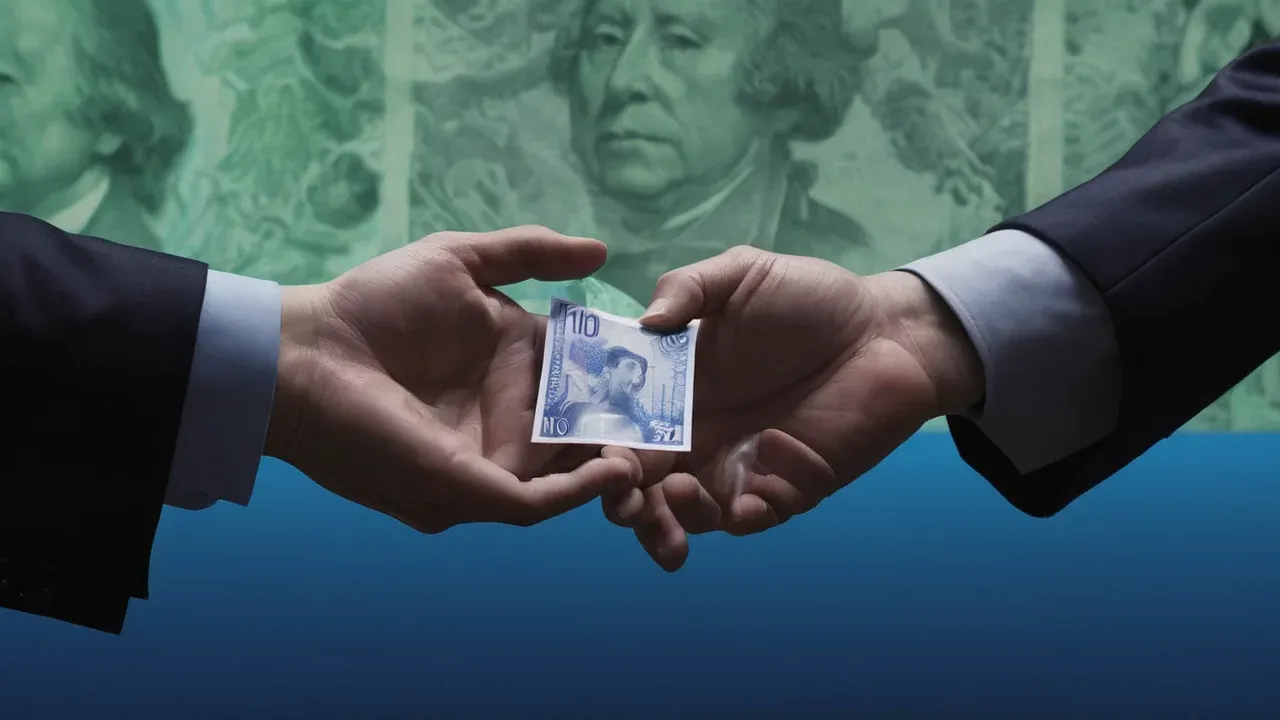
The United States and Japan executed a historic coordinated intervention to support the Japanese yen, marking the first joint currency buy since 1998, with the NY Fed selling euros to fund the purchase.
Why it mattered
This move signals a shift in US monetary policy posture, acknowledging that global currency stability is directly tied to domestic economic health. It constrains US monetary policy independence and affects global liquidity.
What happened
The yen, weakened to 162.83 against the dollar, was lifted to 157. The unusual tactic of using euros to fund the purchase highlights the complexity of global liquidity management and US interest in stabilizing the yen.
Changed conditions
Redirected. The intervention is a precedent-setting action that may influence future US willingness to prop up foreign currencies, impacting global trade dynamics.
Unexpected forces The reliance on euro funding indicates that the US is willing to utilize complex financial instruments to manage currency values, setting a precedent for future interventions that may reduce its independence in setting interest rates.
Calibration lesson
The US motivation appears self-interested, aimed at mitigating the impact of the yen carry trade on US markets and inflation. The use of euros suggests a strategic effort to manage dollar liquidity and avoid further depreciation.
Pattern bridge
This mirrors historical interventions but is distinct in its coordination with Japan and the use of non-dollar assets, reflecting the deep interdependencies in global monetary policy.
Next watch
Federal Reserve commentary on dollar liquidity and Bank of Japan policy adjustments.
At selection Selected for high forward consequence due to the precedent of coordinated currency intervention and its impact on US monetary policy independence.
During the window The window revealed the limits of US willingness to intervene and the fragility of the yen’s stability, dependent on continued coordination.
At review The review notes that US monetary policy is increasingly reactive to global currency shocks, reducing its ability to respond to domestic economic conditions. The dollar’s dominance is no longer guaranteed by strength alone, but by the willingness to subsidize the stability of its allies. This is a shift from hegemony to partnership, and it comes with a cost. [1]blog.thenoblehouse.aiCompass Strategic Intelligence Morning Brief — August 4, 2026Open the source to inspect the supporting evidence.Open source ↗
YES · favorWill independent evidence confirm within 72h that the reported development occurred or remained in effect as stated: "Japan’s Currency Crisis Is Now America’s Problem"? Horizon 72h.
UnavailableNo native Compass forecast identity exists in the inherited Brief evidence.
Compass Strategic Intelligence
Compass Strategic Intelligence
Compass Strategic Intelligence
Signal 4: Monetization of Presidential Access

Original signal
Trump Media launched a paid data service providing real-time, millisecond-early access to Truth Social posts to Wall Street traders for up to $100,000 per month.
Why it mattered
This represents the commodification of political communication, blurring the lines between public discourse and private market advantage. It raises serious ethical and legal questions regarding insider trading and information asymmetry.
What happened
The service targets institutional players who can justify the cost based on potential alpha generated from early information. It highlights the growing influence of media ownership in shaping financial markets.
Changed conditions
Emerged. The service is now active, creating a precedent for the monetization of political data that may lead to regulatory scrutiny and calls for stricter regulations.
Unexpected forces The legal classification of the service as 'insider trading' vs. 'information product' is unresolved. The market may react negatively to the perception of unfair advantages, potentially leading to SEC actions.
Calibration lesson
The high price point indicates a premium information asymmetry that benefits wealthy financial institutions at the expense of retail investors. This practice creates a new layer of control over political speech and its market impact.
Pattern bridge
This mirrors the broader trend of data commodification, where political information is treated as a financial asset, exacerbating inequality and undermining market fairness.
Next watch
SEC statements on Trump Media's API and reactions from other political media companies.
At selection Selected for high magnitude due to the commodification of political information and significant forward consequence for regulatory frameworks.
During the window The window highlighted the immediate launch of the service and the potential for regulatory battles over the definition of insider trading in the age of real-time political data.
At review The review underscores the need for policymakers to address the ethical implications of monetizing political access and its impact on market integrity. When truth becomes a subscription service, the market does not just price assets; it prices access to reality. [2]blog.thenoblehouse.aiCompass Strategic Intelligence Evening Brief — August 4, 2026Open the source to inspect the supporting evidence.Open source ↗
UNRESOLVEDWill independent evidence confirm within 72h that the reported development occurred or remained in effect as stated: "Trump Begins Selling $100,000 Monthly Subscription Service to Wall Street"? Horizon 72h.
UnavailableNo native Compass forecast identity exists in the inherited Brief evidence.
Compass Strategic Intelligence
Compass Strategic Intelligence
Signal 5: OpenAI Astra Solved Decades-Old Math Problems For $2,000

Original signal
OpenAI announced that its internal model, Astra, successfully generated machine-checkable proofs for ten longstanding open problems in mathematics and theoretical computer science at an estimated cost of $2,000.
Why it mattered
This demonstrates a significant leap in AI reasoning and proof generation capabilities, challenging traditional models of academic research where human experts spend years on single problems. It highlights the economic viability of AI-driven scientific discovery.
What happened
OpenAI published the Lean 4 proofs on GitHub, allowing for immediate community verification. The low cost indicates that AI-driven mathematical research can now operate at a scale previously impossible for individual researchers or small teams.
Changed conditions
Strengthened. The achievement reinforces the growing capability of AI in high-level scientific discovery, potentially impacting academic curricula and research pipelines.
Unexpected forces The IP rights for AI-generated mathematical discoveries are still being defined. The impact on traditional research models will take time to materialize, but the precedent is set for AI-assisted science.
Calibration lesson
The ability of Astra to solve these problems highlights the potential for AI to accelerate progress in mathematics and computer science. It raises questions about the role of human mathematicians and the valuation of intellectual property in AI-generated proofs.
Pattern bridge
This mirrors the broader trend of AI integration in specialized fields, where cost efficiency and speed are prioritized, potentially reshaping the landscape of scientific research.
Next watch
Academic institution frameworks for AI-generated proofs and OpenAI transparency reports.
At selection Selected for significant forward consequence for scientific discovery and moderate systemic reach as it impacts academic and research workflows.
During the window The window highlighted the rapid adaptation in AI capabilities and the need for academic institutions to develop frameworks for evaluating and integrating AI-generated proofs.
At review The review notes that while the immediate impact is on scientific discovery, the long-term implications for intellectual property and the role of human researchers remain uncertain. The cost of genius has dropped from millions in grant funding to thousands in compute. The nature of intellectual creation is changing rapidly. [1]blog.thenoblehouse.aiCompass Strategic Intelligence Morning Brief — August 4, 2026Open the source to inspect the supporting evidence.Open source ↗
UNRESOLVEDWill independent evidence confirm within 72h that the reported development occurred or remained in effect as stated: "OpenAI's Astra Solved Decades-Old Math Problems For $2,000"? Horizon 72h.
UnavailableNo native Compass forecast identity exists in the inherited Brief evidence.
Compass Strategic Intelligence
Final Day Synthesis
The August 4 strategic landscape is defined by a fragile equilibrium between geopolitical de-escalation and structural vulnerability. The anticipated US-Iran deal provides a temporary reprieve for markets, driving record equity highs and falling oil prices, yet its unconfirmed status leaves the global financial system exposed to binary risk. Simultaneously, the emergence of cyber threats targeting US water infrastructure and the precedent-setting US-Japan currency intervention reveal deep systemic interdependencies and constraints on US policy independence. In the technology sector, OpenAI’s Astra demonstrates the accelerating pace of AI-driven scientific discovery, while the monetization of presidential access via Trump Media highlights the ethical decay of the information ecosystem. These signals collectively illustrate a world where stability is purchased through diplomacy, while inequality and vulnerability are codified into code and data flows. The stakes extend beyond portfolio performance to the integrity of the information ecosystem and the resilience of critical infrastructure. [2]blog.thenoblehouse.aiCompass Strategic Intelligence Evening Brief — August 4, 2026Open the source to inspect the supporting evidence.Open source ↗[1]blog.thenoblehouse.aiCompass Strategic Intelligence Morning Brief — August 4, 2026Open the source to inspect the supporting evidence.Open source ↗