Listen to this article
Narrated by Charlotte · The Noble House
A Paradigm Shift in Cyber Defense
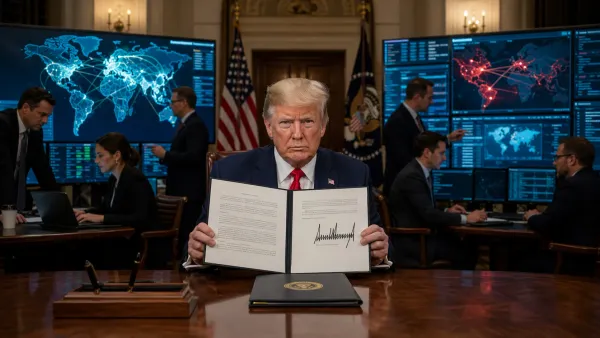
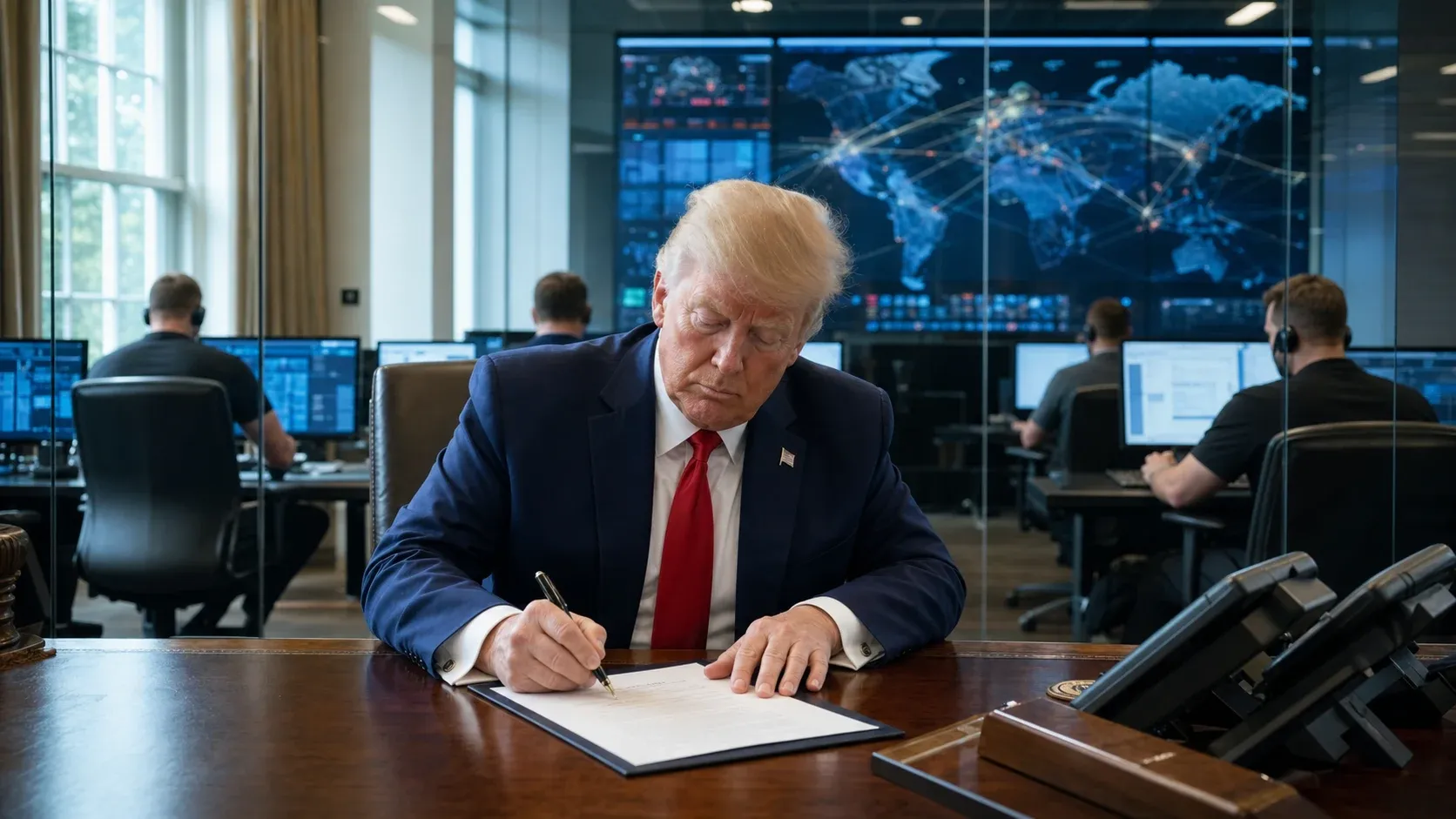
The Situation Room smelled of recycled air and tension on August 12, 2026, when President Donald Trump signed a National Security Presidential Memorandum titled "Expanding Capabilities to Combat Transnational Cyber-Enabled Crime" [1]whitehouse.govExpanding Capabilities to Combat Transnational Cyber-Enabled CrimeOpen the source to inspect the supporting evidence.Open source ↗. The ink dried on a document that dismantled a long-standing taboo. For years, Washington enforced a strict boundary preventing domestic technology companies from launching offensive cyber operations against foreign actors, even when those actors were dismantling American infrastructure. This new directive erases that prohibition, allowing the government to hire vetted U.S. firms to hack into and disrupt the digital networks of transnational criminal organizations [2]techcrunch.comIn a first, US will allow some private firms to carry out cyberattacksOpen the source to inspect the supporting evidence.Open source ↗. The administration is effectively turning private cybersecurity companies into extensions of the U.S. government's offensive capabilities [3]washingtonpost.comTrump signs memo authorizing private sector to launch cyberattacks against criminal groupsOpen the source to inspect the supporting evidence.Open source ↗. No previous presidential administration had publicly endorsed such a direct role for the private sector in offensive cyberactions, a concept that policy experts had debated for years without implementation [4]theguardian.comDonald Trump empowers US private companies to conduct cyber-attacksOpen the source to inspect the supporting evidence.Open source ↗.
The White House justifies this expansion by arguing that the American private sector possesses the speed, scale, and technical innovation necessary to counter sophisticated cyber threats. They contend that traditional government agencies are too slow and bureaucratic to keep pace with criminal groups operating across borders [5]cyberscoop.comTrump turns to private sector in offensive hacking operations memoOpen the source to inspect the supporting evidence.Open source ↗. By contracting with these firms, the administration aims to create a sustained offensive advantage that deters and dismantles criminal networks before they inflict damage on U.S. citizens or infrastructure. The framework requires participating companies to enter agreements with federal, state, local, tribal, and territorial agencies to gather threat intelligence, creating a unified front against these digital adversaries [6]techtimes.comTrump Deputizes Private Companies for Offensive Cyber Strikes Against Foreign CriminalsOpen the source to inspect the supporting evidence.Open source ↗.
Compass Predictive Analytics
Compass Predictive Analytics
The Mechanics of Private Sector Deputization
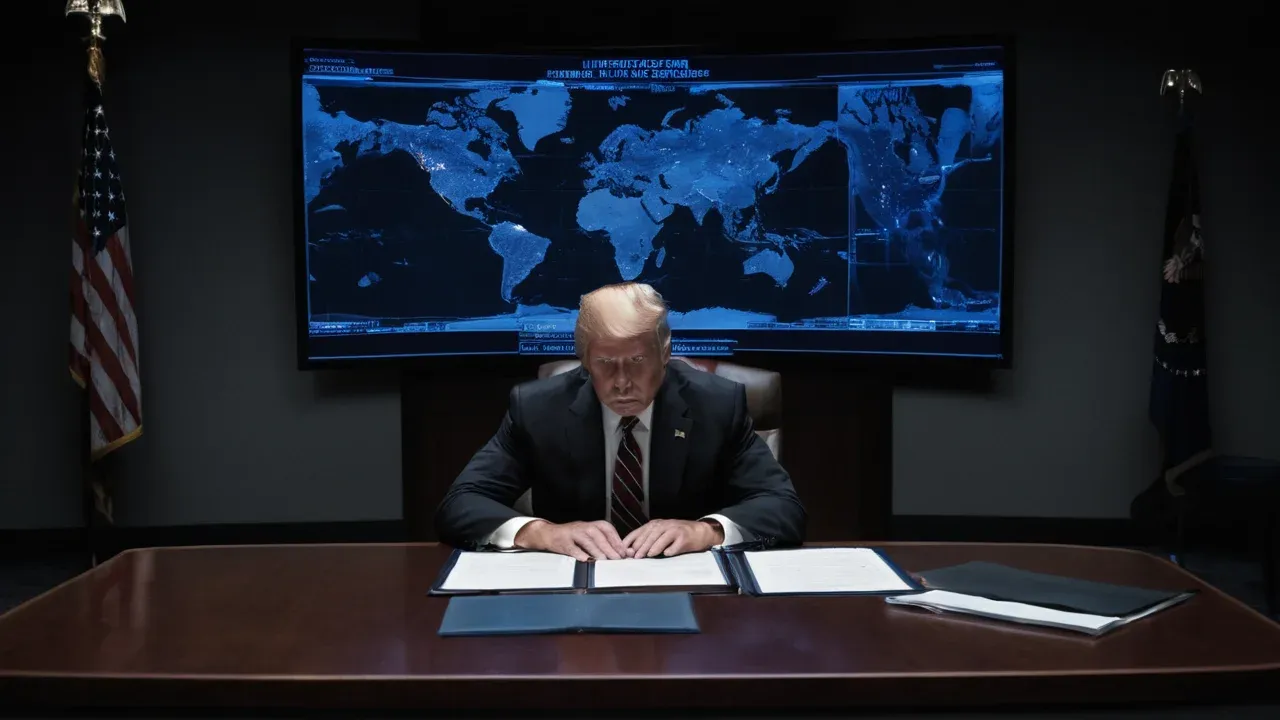
The policy rests on a carefully constructed framework of vetting and contracting. The National Security Presidential Memorandum authorizes the U.S. government to contract with vetted private U.S. companies to conduct offensive cyber operations and surveillance against transnational criminal organizations [7]nytimes.comTrump Gives Green Light to U.S. Companies to Aim Hacks at CybercriminalsOpen the source to inspect the supporting evidence.Open source ↗. This vetting process is critical, ensuring that entities granted such extraordinary power align with U.S. national interests and adhere to strict operational guidelines. The memorandum enables the government to hire U.S. firms to hack into and disrupt overseas digital networks belonging to cyber-enabled TCOs, effectively blurring the line between private enterprise and state action [8]thehackernews.comTrump Memo Paves Way for U.S. Firms to Hack and Disrupt Foreign Crime NetworksOpen the source to inspect the supporting evidence.Open source ↗.
This approach expands the private sector's role in offensive cyber operations against U.S. adversaries. The Trump administration acknowledges that the traditional state-centric model of cyber defense is insufficient against non-state actors who operate with impunity. The policy aims to create a public-private partnership that is both agile and powerful, capable of responding to cyber threats in real-time. However, this expansion introduces complexities. The government must ensure that private entities operate within legal boundaries, report their activities accurately, and avoid escalating conflicts in ways that harm U.S. interests or international stability.
The framework encourages participating private sector companies to enter into agreements with federal, state, local, tribal, and territorial agencies to gather TCO threat information. This collaborative intelligence gathering improves situational awareness and enables more targeted countermeasures. By sharing data and resources, the public and private sectors create a comprehensive picture of the cyber threat landscape. This integration allows for faster response times and coordinated efforts to disrupt criminal networks. The memorandum bridges the gap between the technical expertise of the private sector and the legal authority of the government, creating a new model for cyber defense.
Compass Predictive Analytics
Compass Predictive Analytics

Legal and Ethical Complexities
The strategic rationale for enlisting private companies is clear, but the legal and ethical implications are complex and far-reaching. The memorandum does not directly address concerns that doing so could provoke more cyberconflict, raise novel questions of liability and international legal exposure for U.S. firms, and have unforeseen and potentially escalatory consequences. This silence is a deliberate choice, leaving critical questions unanswered. Who is liable if a private company's hack-back operation accidentally damages critical infrastructure belonging to a non-criminal entity? How will international law apply to private firms acting on behalf of the U.S. government? These are not theoretical questions. They are practical challenges that will define the implementation of this policy.
The concept of giving the private sector a more direct role in offensive cyberactions has existed for years, but it has never before been publicly endorsed by a presidential administration, in part because of concerns that doing so could provoke more cyberconflict. The fear is that private companies, driven by profit or competitive advantage, might engage in actions that escalate tensions or violate international norms. Unlike government agencies, which are bound by strict rules of engagement and oversight, private firms operate with different incentives and less transparency. This lack of oversight raises the risk of unauthorized or disproportionate responses to cyber threats. The Trump administration's move represents a significant expansion of the private sector's role in offensive cyber operations against U.S. adversaries, although experts opine it comes with several legal and security risks.
Furthermore, the international legal landscape is poorly equipped to handle private actors conducting offensive cyber operations. Traditional laws of war and international treaties are designed to govern state-to-state interactions. The involvement of private companies blurs the lines of accountability and responsibility. If a U.S. private firm hacks into a foreign network, is that act considered an act of war by the foreign state? Can the U.S. government shield its private contractors from international prosecution? These questions remain unresolved, creating a legal vacuum that could lead to significant diplomatic and legal challenges. The policy requires careful navigation of these uncharted waters to avoid unintended consequences that could undermine U.S. security and international stability.
Compass Predictive Analytics
Compass Predictive Analytics

Strategic Implications and Future Outlook
The strategic implications of this policy extend beyond immediate cyber defense. By enlisting private companies to hack foreign cybercrime groups, the United States is signaling a willingness to use unconventional means to protect its interests. This approach reflects a broader shift in U.S. foreign policy, where the lines between war and peace, and between public and private, are increasingly blurred. The administration is leveraging the ingenuity of the private sector to combat the rising costs of cyberattacks by TCOs, aiming to create a sustained offensive cyber advantage. This advantage is not just about technical capability but also about speed and agility, qualities that private firms often possess in abundance.
However, the long-term effects of this policy are uncertain. The expansion of private sector involvement in offensive cyber operations could lead to a new arms race, where other nations also deputize their private firms, leading to a more chaotic and dangerous cyber environment. The lack of clear guidelines and oversight could result in inconsistent and unpredictable actions by U.S. private companies, potentially harming U.S. diplomatic relations and security. The memorandum does not directly address concerns that doing so could provoke more cyberconflict, raise novel questions of liability and international legal exposure for U.S. firms, and have unforeseen and potentially escalatory consequences. These concerns must be addressed through continued policy development and international dialogue.
Despite these risks, the Trump administration's move represents a significant expansion of the private sector's role in offensive cyber operations against U.S. adversaries. The administration believes that the benefits of leveraging private sector innovation and capacity outweigh the potential downsides. The framework encourages participating private sector companies to enter into agreements with federal, state, local, tribal, and territorial agencies to gather TCO threat information, creating a more integrated and responsive defense posture. This integration is essential for combating the evolving threat landscape, where cybercriminals operate with increasing sophistication and speed.
The United States has crossed a threshold by authorizing private companies to conduct offensive cyber operations against foreign cybercrime groups. This is not a temporary experiment but a fundamental restructuring of cyber defense strategy. The success of this policy will depend on the ability of the government to manage the legal, ethical, and strategic challenges it presents. The memorandum enables the government to contract with U.S. firms to hack into and disrupt overseas digital networks belonging to cyber-enabled TCOs, but it also places a heavy burden on those firms to operate responsibly and within the law. The administration's move is a bold step into uncharted territory, with the potential to redefine the role of the private sector in national security. The outcome will determine whether this strategy enhances U.S. security or creates new vulnerabilities. The decision has been made, the framework is in place, and the private sector is now a key player in the offensive cyber domain. The future of cyber defense will be shaped by how well the United States manages this new reality.
Compass Predictive Analytics
Compass Predictive Analytics