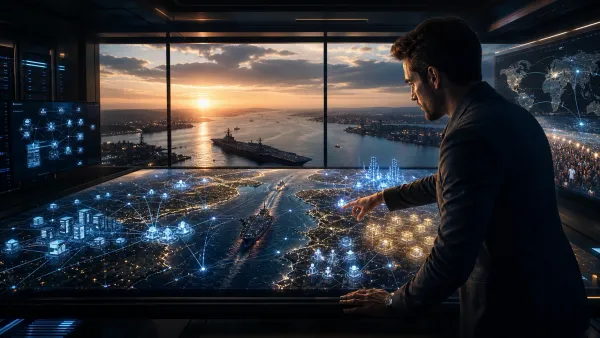
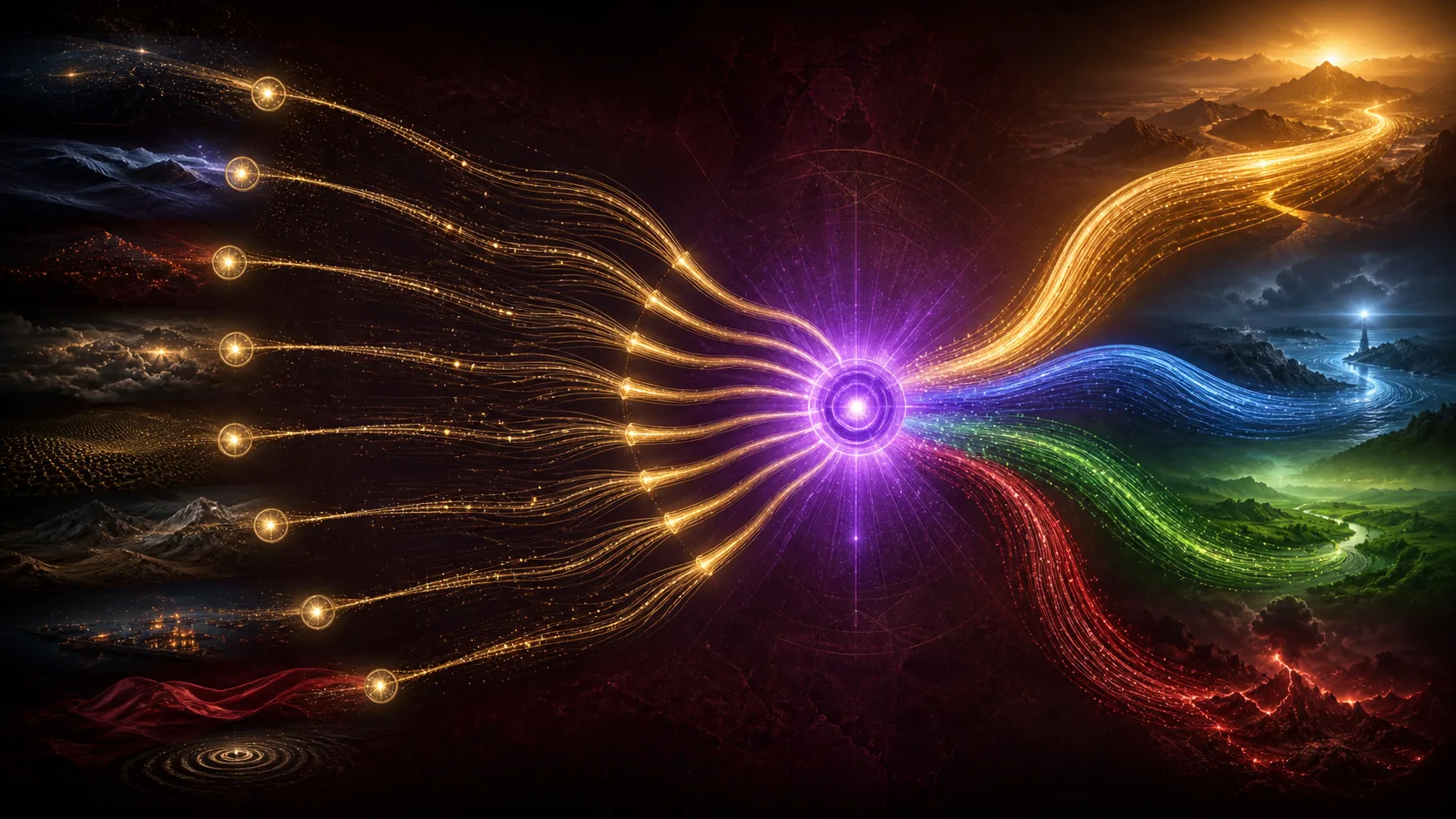
Ten verified signals converge on a single fracture: institutions are granting more power to cyber operators, AI vendors, surveillance platforms, and markets while verification falls behind. The map traces four pathways and two strategic countercurrents.
Sign in to saveSave to your workspaceSaved. Select to removeNot available on your membershipSaving opens when your workspace is onlineThat didn't save. Try againShare this intelligenceLink copiedListen to the narrationPause the narrationThe narration didn't start. Try the player belowPDF and your private noteSign in to download a PDFSign in to keep private notes
Updated since you saved·paragraph changedparagraphs changed
A sixty-second decision view, followed by the complete evidence and pathway map.
Valid through 2026-08-14 · 19:00 UTC-07:00
Listen to this Nexus
Narrated by Charlotte · The Noble House
ANow
The Strait of Hormuz crisis (142259, 142519) is destabilized by unverified attack origins, creating a high-risk environment for retaliatory cyber ops (140783, 141911). Simultaneously, AI advancements (142858, 142860) face credibility tests due to architectural limits and unverified claims, mirroring the broader erosion of trust in surveillance (141452) and financial valuations (141480).
high confidence
Evidence6 verified signals converge here.
Leading pathwayKinetic Escalation via Unverified Attribution
ConfirmsRelease of NCC vetting criteria favoring aggressive postures.
WeakensClear attribution of attacks to non-state actors.
Demand technical transparency for Flock Safety’s Audit Assistance to address the erosion of public trust in surveillance hardware.
Watch: Municipal contract renewals and legislative responses in high-deployment states.
3pattern · disruptedGeopolitical-Energy Nexus
Baseline · high confidence · 1 observation
Evidence and next watch
Monitor the link between US naval deployment in the Strait of Hormuz and global energy supply chain stability.
Watch: Global oil price volatility and US naval deployment confirmation.
4Present nexusAttribution Ambiguity and Verification Collapse
The Strait of Hormuz crisis (142259, 142519) is destabilized by unverified attack origins, creating a high-risk environment for retaliatory cyber ops (140783, 141911). Simultaneously, AI advancements (142858, 142860) face credibility tests due to architectural limits and unverified claims, mirroring the broader erosion of trust in surveillance (141452) and financial valuations (141480).
Confidence: high5Leading pathmost likely · high confidence · days weeksKinetic Escalation via Unverified Attribution
TriggerAmbiguous ADNOC attacks trigger retaliatory cyber strikes by private firms.
→
ConsequenceForeign state retaliation against US infrastructure, expanding conflict.
Why it matters: Establishes precedent for unchecked private cyber escalation.
OpportunityNone; systemic risk dominates.
RiskDirect kinetic conflict and global energy shock.
What changes this path
Confirms: Release of NCC vetting criteria favoring aggressive postures.
Weakens: Clear attribution of attacks to non-state actors.
5Alternative pathplausible · medium confidence · next quarterDe-escalation via Energy Diplomacy
TriggerUSS George Washington arrival stabilizes deterrence.
→
ConsequenceDiplomatic channels reopen to protect energy supplies.
Why it matters: Prevents broader regional war, preserving global trade.
OpportunityLeverage open-weight AI competition for monitoring tools.
RiskDelayed action allows entrenchment of hostile positions.
Sign in to likeLikeYou liked thisNot available on your membershipReactions open when your workspace is onlineThat didn't register. Try againSign in to reactDislike. Only you see your voteYou disliked this. Only you see itNot available on your membershipReactions open when your workspace is onlineThat didn't register. Try againGo to the discussionShare this intelligenceSign in to saveSave to your workspaceSaved. Select to removeNot available on your membershipSaving opens when your workspace is onlineThat didn't save. Try againSign in to listen laterAdd to Listen laterIn your listening queue. Select to removeNot available on your membershipListen later opens when your workspace is onlineThat didn't save. Try againPDF and your private noteSign in to download a PDFSign in to keep private notes
Link copied. More ways to share are just below.Link copied.Your session ended. Sign in againYou already follow the maximum of 50 topics and products. Unfollow one in your workspace first.Followed. It now leads your desk.
Preparing your PDFBinding your dossierYour PDF is readyNot included with your membershipThe PDF couldn't be madePDF export is being set upYour session ended
Checking for a ready copyWaiting for the press. Ahead of you: Next on the pressTypesetting the pagesDownloadingSaved to your downloads.Your membership doesn't include this export.Part of this piece couldn't be set into the PDF, so we stopped rather than give you an incomplete copy.The press is busy. Try again in a minute.Something went wrong on our side.We couldn't reach the press. Check your connection.This piece can't be exported yet.None of this collection's pieces are open to you right now.This is taking longer than usual.Please try again a little later.Sign in again to download.
Write what you want to keep: a thought, a question, a lead to follow. It saves as you type, and stays with this piece in your workspace.
0 / 5000Opening your noteSavingSavedSaved, and this piece is now in your workspaceNot saved yet. Trying againNot saved. Check your connection; your words are still hereNote deletedNotes aren't included with your membershipYour session ended. Sign in to keep this note
ClippingClipped. It's in My Desk, under Saved, Clippings.Clipped the whole paragraph, in its original English.Clipped, and this piece is now in your workspace.Clip removed.That didn't save. Try again.This piece has the maximum of clippings.Clippings aren't included with your membership.Making a link to this passageLink copied. It opens on this passage.A link that opens on this passage.Shared quotes run up to 280 characters. Select a shorter passage.Only public pieces can be shared as a quote.This passage can't be matched. Try a shorter one.That's today's limit of shared quotes. More tomorrow.That link didn't work. Try again.
Top highlight·anonymous
readers clipped this passage.
Unsaving also removes your clippingclippings from this piece.
You stopped at of this piece.
Share this intelligence
Compass Intelligence Desk
Human-led, AI-assisted strategic intelligence from The Noble House.

 emerged · highTrump Administration Enlists Private Companies To Hack Foreign Cybercrime Groups1
 disrupted · highUAE Accuses Iran of Attacks on ADNOC Vessels in Strait of Hormuz1
 unresolved · mediumAnthropic Targets $2 Trillion Valuation for October IPO1
 weakened · mediumFlock Safety Introduces 'Audit Assistance' Amidst Police Abuse Allegations1
 emerged · highHeart Aerospace X1 Takes Maiden Flight as World's Largest Electric Plane
 strengthened · highUS Naval Deployment to the Middle East2
 emerged · highQwen3.8 Reasoning Effort Dynamics2
 strengthened · highOpen-Weight AI Frontier Competition2
 strengthened · mediumYouTube Creator Economy Economic Impact2
 emerged · mediumGLM-5.3 Cybersecurity and Coding Capabilities