

Listen to this article
Narrated by Charlotte · The Noble House

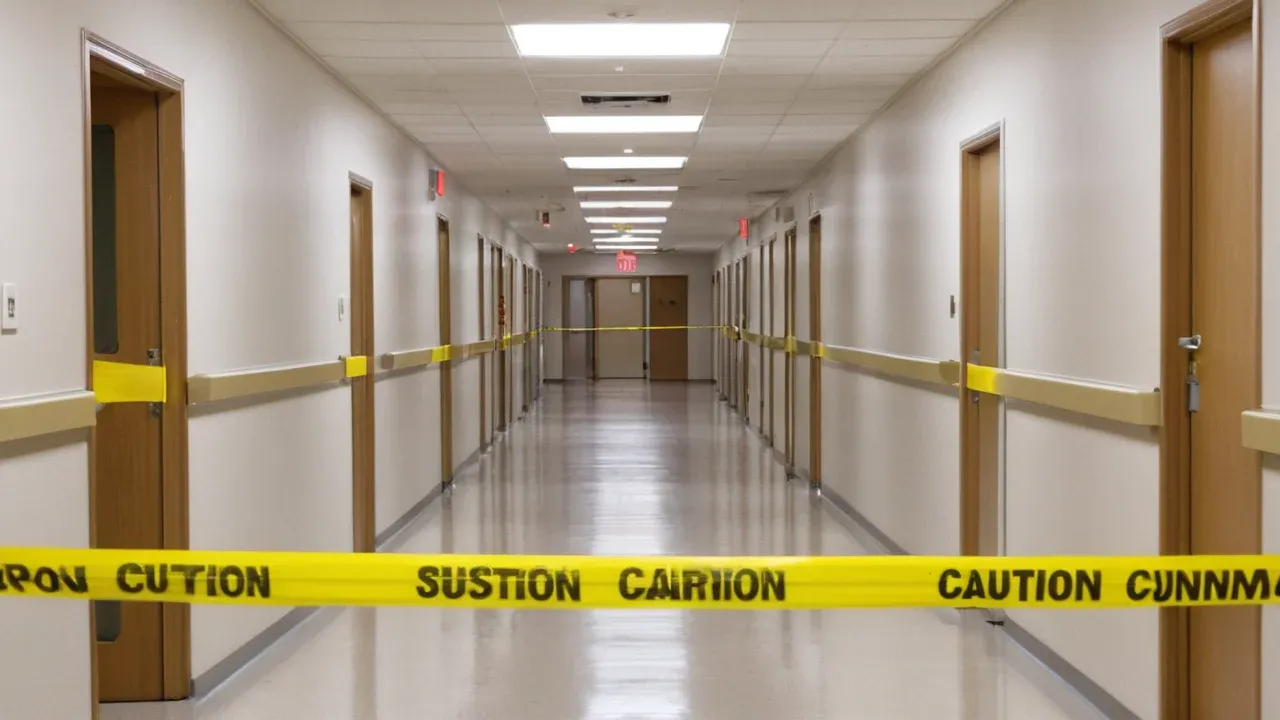
A laboratory technician at the Irkutsk Anti-Plague Research Institute of Siberia and the Far East has died, and authorities have quarantined about 200 people as a precaution. Darya Shipilova, a 28-year-old laboratory technician, fell ill while working and died on October 2, 2026 [1]theconversation.comNearly 200 people are in quarantine in Siberia after 28-year-old Darya Shipilova fell ill at work and later died on October 2Nearly 200 people are in quarantine in Siberia after 28-year-old Darya Shipilova fell ill at work and later died on October 2.Open source ↗[5]theguardian.comLab worker 'possibly' dies of plague in Siberia, prompting quarantine measuresDarya Shipilova, a 28-year-old employee at the anti-plague institute in the city of Irkutsk, became ill at work. She died two days later on the night of 2 October.Open source ↗. Her death in Shelekhov, a town within the Irkutsk region, occurred two days after her initial onset of symptoms [5]theguardian.comLab worker 'possibly' dies of plague in Siberia, prompting quarantine measuresDarya Shipilova, a 28-year-old employee at the anti-plague institute in the city of Irkutsk, became ill at work. She died two days later on the night of 2 October.Open source ↗. The circumstances surrounding her illness remain partially opaque, yet they have prompted a rapid response from regional authorities, national health agencies, and international bodies. About 200 people who had contact with Shipilova were quarantined or placed under medical observation, and a local official said 60 percent of those quarantined have since been released [4]usnews.comExplainer-What Do We Know About Plague Institute Lab Worker's Death in Russia?The Irkutsk Anti-Plague Research Institute of Siberia and the Far East was set up in 1934 to control plague outbreaks.Open source ↗. The institute itself has been locked down, with staff confined to the premises since the onset of the incident [5]theguardian.comLab worker 'possibly' dies of plague in Siberia, prompting quarantine measuresDarya Shipilova, a 28-year-old employee at the anti-plague institute in the city of Irkutsk, became ill at work. She died two days later on the night of 2 October.Open source ↗.
While initial reports suggested a potential link to pneumonic plague, official diagnoses have remained ambiguous. Russian health watchdog Rospotrebnadzor stated that Shipilova died from pneumonia of unknown aetiology [9]msn.comRussia denies plague death but quarantines hundreds without explanationRospotrebnadzor said Darya Shipilova, 28, died of 'pneumonia of unknown aetiology' with no links to her work at the Irkutsk Anti-Plague Institute, but imposed quarantine on her contacts.Open source ↗ and that no relevant pathogens had been found in anyone who came into contact with her [4]usnews.comExplainer-What Do We Know About Plague Institute Lab Worker's Death in Russia?The Irkutsk Anti-Plague Research Institute of Siberia and the Far East was set up in 1934 to control plague outbreaks.Open source ↗. This creates a complex picture where precautionary measures are extensive despite the lack of confirmed infectious disease transmission. The following analysis examines the verified facts, the nature of the pathogen involved, the response mechanisms, and the broader implications for global public health security.
Verified Facts and Information Gaps
The core verified events establish the timeline and scale of the containment efforts. Shipilova died on October 2 after falling ill at work [1]theconversation.comNearly 200 people are in quarantine in Siberia after 28-year-old Darya Shipilova fell ill at work and later died on October 2Nearly 200 people are in quarantine in Siberia after 28-year-old Darya Shipilova fell ill at work and later died on October 2.Open source ↗. Rospotrebnadzor confirmed she died from pneumonia of unknown aetiology, explicitly noting that tests found no microorganisms associated with her professional duties [9]msn.comRussia denies plague death but quarantines hundreds without explanationRospotrebnadzor said Darya Shipilova, 28, died of 'pneumonia of unknown aetiology' with no links to her work at the Irkutsk Anti-Plague Institute, but imposed quarantine on her contacts.Open source ↗. Despite this lack of confirmed plague diagnosis, authorities quarantined nearly 200 people [4]usnews.comExplainer-What Do We Know About Plague Institute Lab Worker's Death in Russia?The Irkutsk Anti-Plague Research Institute of Siberia and the Far East was set up in 1934 to control plague outbreaks.Open source ↗. Local officials in the neighboring region of Buryatia, specifically head Alexey Tsydenov, initially stated Shipilova had died from plague before editing the statement to say she possibly died from the disease [5]theguardian.comLab worker 'possibly' dies of plague in Siberia, prompting quarantine measuresDarya Shipilova, a 28-year-old employee at the anti-plague institute in the city of Irkutsk, became ill at work. She died two days later on the night of 2 October.Open source ↗. This conflicting messaging contributed to public anxiety and confusion regarding the actual risk level.
Information flow from Russian authorities has been described as limited and confusing. Regional governor Igor Kobzev urged residents to remain calm, stating that all identified contacts were under observation and none showed signs of illness [5]theguardian.comLab worker 'possibly' dies of plague in Siberia, prompting quarantine measuresDarya Shipilova, a 28-year-old employee at the anti-plague institute in the city of Irkutsk, became ill at work. She died two days later on the night of 2 October.Open source ↗. However, local media reported that hospitals in Irkutsk were placed under quarantine, restricting visits and imposing mask requirements at industrial sites like the Shelekhov aluminium smelter [5]theguardian.comLab worker 'possibly' dies of plague in Siberia, prompting quarantine measuresDarya Shipilova, a 28-year-old employee at the anti-plague institute in the city of Irkutsk, became ill at work. She died two days later on the night of 2 October.Open source ↗. Social media rumors circulated widely, suggesting Shipilova dropped a test tube containing plague bacteria, traveled to Thailand, or visited the Mongolian border [4]usnews.comExplainer-What Do We Know About Plague Institute Lab Worker's Death in Russia?The Irkutsk Anti-Plague Research Institute of Siberia and the Far East was set up in 1934 to control plague outbreaks.Open source ↗. The test tube theory has been rejected by Russia's health watchdog, which said it found no evidence of an accident involving pathogens [4]usnews.comExplainer-What Do We Know About Plague Institute Lab Worker's Death in Russia?The Irkutsk Anti-Plague Research Institute of Siberia and the Far East was set up in 1934 to control plague outbreaks.Open source ↗[9]msn.comRussia denies plague death but quarantines hundreds without explanationRospotrebnadzor said Darya Shipilova, 28, died of 'pneumonia of unknown aetiology' with no links to her work at the Irkutsk Anti-Plague Institute, but imposed quarantine on her contacts.Open source ↗. There is no evidence in the public domain to support the other accounts [4]usnews.comExplainer-What Do We Know About Plague Institute Lab Worker's Death in Russia?The Irkutsk Anti-Plague Research Institute of Siberia and the Far East was set up in 1934 to control plague outbreaks.Open source ↗.
The absence of a confirmed diagnosis creates an evidence gap. No PCR test results confirming Yersinia pestis in Shipilova have been published [9]msn.comRussia denies plague death but quarantines hundreds without explanationRospotrebnadzor said Darya Shipilova, 28, died of 'pneumonia of unknown aetiology' with no links to her work at the Irkutsk Anti-Plague Institute, but imposed quarantine on her contacts.Open source ↗. The World Health Organization said Russia had told it there were no plague cases in the city of Irkutsk; Reuters could not establish whether this meant plague could be ruled out in her case [4]usnews.comExplainer-What Do We Know About Plague Institute Lab Worker's Death in Russia?The Irkutsk Anti-Plague Research Institute of Siberia and the Far East was set up in 1934 to control plague outbreaks.Open source ↗. Consequently, the incident remains classified as a suspected case rather than a confirmed outbreak. The distinction between verified events and analysis is critical; while the quarantine is a verified action, the interpretation of its necessity relies on expert assessment rather than definitive biological confirmation.
Compass Predictive Analytics

Biological Context and Transmission Risks
Plague, caused by the bacterium Yersinia pestis, presents distinct transmission profiles depending on the clinical form. Bubonic plague is spread from animals to humans via fleas and causes swollen lymph nodes [2]theconversation.comThe death of a Russian plague researcher, explained by a microbiologistConflicting information about the death of a lab worker at a Russian plague research institute has fuelled fears about the possibility of pneumonic plague spreading.Open source ↗. Septicemic plague occurs when the disease enters the bloodstream. Pneumonic plague, the most severe form, affects the lungs and can be transmitted between people via respiratory droplets [2]theconversation.comThe death of a Russian plague researcher, explained by a microbiologistConflicting information about the death of a lab worker at a Russian plague research institute has fuelled fears about the possibility of pneumonic plague spreading.Open source ↗. This form is rare but carries a fatality rate of up to 100 percent if left untreated [2]theconversation.comThe death of a Russian plague researcher, explained by a microbiologistConflicting information about the death of a lab worker at a Russian plague research institute has fuelled fears about the possibility of pneumonic plague spreading.Open source ↗.
Plague is endemic to Siberia, where it persists naturally among wild rodents and their fleas [4]usnews.comExplainer-What Do We Know About Plague Institute Lab Worker's Death in Russia?The Irkutsk Anti-Plague Research Institute of Siberia and the Far East was set up in 1934 to control plague outbreaks.Open source ↗. However, human cases in Russia are rare. The last recorded human infection in Russia prior to this incident occurred in 2016, involving a boy who contracted the disease after handling a marmot [5]theguardian.comLab worker 'possibly' dies of plague in Siberia, prompting quarantine measuresDarya Shipilova, a 28-year-old employee at the anti-plague institute in the city of Irkutsk, became ill at work. She died two days later on the night of 2 October.Open source ↗. Plague cases typically occur in rural and agricultural areas, making a potential lab leak in an urban area unusual [2]theconversation.comThe death of a Russian plague researcher, explained by a microbiologistConflicting information about the death of a lab worker at a Russian plague research institute has fuelled fears about the possibility of pneumonic plague spreading.Open source ↗.
Pneumonic plague requires direct, close contact for transmission via airborne droplets [10]aljazeera.comRussia plague quarantine following lab death: Should we be worried?Russia plague quarantine following lab death: Should we be worried? Listen (10 mins) Save Share Russia plague quarantine following lab death: Should we be worried? on social media.Open source ↗. It is fairly transmissible, but not as transmissible as SARS-CoV-2 [7]cnbc.comRussian lab worker dies amid plague reports — here's what we knowAn employee at Russia's anti-plague institute has died from a suspected case of plague.Open source ↗. The disease is treatable with antibiotics if identified quickly [4]usnews.comExplainer-What Do We Know About Plague Institute Lab Worker's Death in Russia?The Irkutsk Anti-Plague Research Institute of Siberia and the Far East was set up in 1934 to control plague outbreaks.Open source ↗. However, since 1995, several antibiotic-resistant strains have been detected in the wild [2]theconversation.comThe death of a Russian plague researcher, explained by a microbiologistConflicting information about the death of a lab worker at a Russian plague research institute has fuelled fears about the possibility of pneumonic plague spreading.Open source ↗. In the 1980s, Soviet scientists engineered resistant strains, which forms the basis of hypothetical biological warfare scenarios [2]theconversation.comThe death of a Russian plague researcher, explained by a microbiologistConflicting information about the death of a lab worker at a Russian plague research institute has fuelled fears about the possibility of pneumonic plague spreading.Open source ↗. Despite this history, there is no evidence that the strain alleged to have killed Shipilova was untreatable or that the lab was researching biological weapons [2]theconversation.comThe death of a Russian plague researcher, explained by a microbiologistConflicting information about the death of a lab worker at a Russian plague research institute has fuelled fears about the possibility of pneumonic plague spreading.Open source ↗.
The severity of pneumonic plague necessitates caution, but its transmission requirements limit its epidemic potential. Experts note that although pneumonic plague is directly transmissible, the contacts of the primary case are known and can be treated, and modern living conditions and available antibiotics limit its potential [5]theguardian.comLab worker 'possibly' dies of plague in Siberia, prompting quarantine measuresDarya Shipilova, a 28-year-old employee at the anti-plague institute in the city of Irkutsk, became ill at work. She died two days later on the night of 2 October.Open source ↗. The presence of natural reservoirs in Siberia means the bacterium exists in the environment, but this does not imply an imminent threat from a laboratory source without further evidence.
Compass Predictive Analytics

International and Regional Response
The international reaction to the incident has been characterized by monitoring rather than alarm. The White House confirmed it is monitoring the situation, with President Trump describing the death as a big problem for Russia and offering assistance [4]usnews.comExplainer-What Do We Know About Plague Institute Lab Worker's Death in Russia?The Irkutsk Anti-Plague Research Institute of Siberia and the Far East was set up in 1934 to control plague outbreaks.Open source ↗. Secretary of State Marco Rubio stated that while he does not think it is cause for alarm, it is cause for focus and keeping an eye on the situation [5]theguardian.comLab worker 'possibly' dies of plague in Siberia, prompting quarantine measuresDarya Shipilova, a 28-year-old employee at the anti-plague institute in the city of Irkutsk, became ill at work. She died two days later on the night of 2 October.Open source ↗. The US encourages Russian authorities to share accurate information quickly and openly [8]arstechnica.comResearchers' death from undisclosed illness sparks mass quarantine in RussiaRoughly 200 people are under medical observation, several hospitals are under quarantine, and dozens are in isolation in Russia following the unexplained death of an infectious disease researcher.Open source ↗.
The World Health Organization (WHO) has been in contact with Russian health authorities to verify the event and its circumstances [3]msn.comWho was the Russian lab worker suspected to have died from pneumonic plague?Local media have named the lab worker who is suspected to have died after coming into contact with pneumonic plague as 28-year-old Darya Shipilova.Open source ↗. The WHO stated that based on unofficial information, the public health risk to the general population appears to be low [7]cnbc.comRussian lab worker dies amid plague reports — here's what we knowAn employee at Russia's anti-plague institute has died from a suspected case of plague.Open source ↗, and it has also assessed the risk as low to moderate for the Irkutsk region, low for Russia as a whole and very low for the WHO European region [9]msn.comRussia denies plague death but quarantines hundreds without explanationRospotrebnadzor said Darya Shipilova, 28, died of 'pneumonia of unknown aetiology' with no links to her work at the Irkutsk Anti-Plague Institute, but imposed quarantine on her contacts.Open source ↗. It emphasized that the risk assessment would be updated once more information is available. The European Centre for Disease Prevention and Control also reported it was closely following the situation [9]msn.comRussia denies plague death but quarantines hundreds without explanationRospotrebnadzor said Darya Shipilova, 28, died of 'pneumonia of unknown aetiology' with no links to her work at the Irkutsk Anti-Plague Institute, but imposed quarantine on her contacts.Open source ↗.
Regional neighbors have stepped up border measures. Kazakhstan, Kyrgyzstan and Uzbekistan said they were stepping up precautionary measures at their borders to guard against the possible spread of infectious diseases [4]usnews.comExplainer-What Do We Know About Plague Institute Lab Worker's Death in Russia?The Irkutsk Anti-Plague Research Institute of Siberia and the Far East was set up in 1934 to control plague outbreaks.Open source ↗. These actions reflect precautionary principles rather than confirmed transmission risks. The international community’s response is driven by the potential severity of pneumonic plague and the opacity of the initial reporting, rather than evidence of widespread contagion.
Local anxiety in Irkutsk stems from a lack of transparent information. Locals report anger that they are not being told anything [5]theguardian.comLab worker 'possibly' dies of plague in Siberia, prompting quarantine measuresDarya Shipilova, a 28-year-old employee at the anti-plague institute in the city of Irkutsk, became ill at work. She died two days later on the night of 2 October.Open source ↗. The discrepancy between official statements downplaying the risk and the visible quarantine measures has fueled speculation. A local journalist notes there are no obvious changes to daily life on the streets, but that people are worried and anxious [5]theguardian.comLab worker 'possibly' dies of plague in Siberia, prompting quarantine measuresDarya Shipilova, a 28-year-old employee at the anti-plague institute in the city of Irkutsk, became ill at work. She died two days later on the night of 2 October.Open source ↗. This highlights the importance of clear communication in public health crises to maintain trust and compliance with safety protocols.
Compass Predictive Analytics

Assessment of Public Health Risk
Experts assess that there is little evidence to suggest an epidemic or pandemic risk at this stage [2]theconversation.comThe death of a Russian plague researcher, explained by a microbiologistConflicting information about the death of a lab worker at a Russian plague research institute has fuelled fears about the possibility of pneumonic plague spreading.Open source ↗. The primary case remains isolated, with contacts identified and monitored without showing symptoms [3]msn.comWho was the Russian lab worker suspected to have died from pneumonic plague?Local media have named the lab worker who is suspected to have died after coming into contact with pneumonic plague as 28-year-old Darya Shipilova.Open source ↗. So far, none of the identified contacts has shown symptoms of illness. Pneumonic plague, while severe, requires specific conditions for spread that are not currently evident in the data [7]cnbc.comRussian lab worker dies amid plague reports — here's what we knowAn employee at Russia's anti-plague institute has died from a suspected case of plague.Open source ↗.
The diagnosis remains unconfirmed. Rospotrebnadzor’s finding of pneumonia of unknown aetiology suggests an infectious process but does not identify Yersinia pestis as the cause [9]msn.comRussia denies plague death but quarantines hundreds without explanationRospotrebnadzor said Darya Shipilova, 28, died of 'pneumonia of unknown aetiology' with no links to her work at the Irkutsk Anti-Plague Institute, but imposed quarantine on her contacts.Open source ↗. This ambiguity allows for multiple explanations, including non-plague bacterial infections or other respiratory pathogens. The lab leak theory, while popular in media speculation, lacks verification and is considered unlikely by several specialists, who note that work with high-risk pathogens is conducted inside sealed safety cabinets with protective suits and strict decontamination protocols [9]msn.comRussia denies plague death but quarantines hundreds without explanationRospotrebnadzor said Darya Shipilova, 28, died of 'pneumonia of unknown aetiology' with no links to her work at the Irkutsk Anti-Plague Institute, but imposed quarantine on her contacts.Open source ↗. One virologist, however, has said the case seems a rare lab accident that is unlikely to go much further [5]theguardian.comLab worker 'possibly' dies of plague in Siberia, prompting quarantine measuresDarya Shipilova, a 28-year-old employee at the anti-plague institute in the city of Irkutsk, became ill at work. She died two days later on the night of 2 October.Open source ↗.
Analysis indicates that the response is appropriate given the uncertainty. Quarantining contacts and isolating the institute are standard procedures for suspected high-consequence pathogens. However, labeling the incident as a plague outbreak without confirmation can cause unnecessary panic [9]msn.comRussia denies plague death but quarantines hundreds without explanationRospotrebnadzor said Darya Shipilova, 28, died of 'pneumonia of unknown aetiology' with no links to her work at the Irkutsk Anti-Plague Institute, but imposed quarantine on her contacts.Open source ↗. The distinction between verified events and analysis must be maintained; the quarantine is a fact, the risk assessment is an analysis based on available data.
The potential for antibiotic resistance adds a layer of complexity but does not change the immediate risk profile. While resistant strains exist, standard treatments are likely effective unless a specific resistant strain was involved, which is unconfirmed [2]theconversation.comThe death of a Russian plague researcher, explained by a microbiologistConflicting information about the death of a lab worker at a Russian plague research institute has fuelled fears about the possibility of pneumonic plague spreading.Open source ↗. The historical context of Soviet-era biological weapons research is often cited in speculation but lacks direct relevance to this specific incident without evidence [2]theconversation.comThe death of a Russian plague researcher, explained by a microbiologistConflicting information about the death of a lab worker at a Russian plague research institute has fuelled fears about the possibility of pneumonic plague spreading.Open source ↗.
Conclusion
The death of Darya Shipilova at the Irkutsk Anti-Plague Research Institute has prompted a robust public health response, yet the risk to the general population remains low based on current evidence. The verified facts confirm her death from pneumonia of unknown aetiology and the quarantine of approximately 200 contacts [9]msn.comRussia denies plague death but quarantines hundreds without explanationRospotrebnadzor said Darya Shipilova, 28, died of 'pneumonia of unknown aetiology' with no links to her work at the Irkutsk Anti-Plague Institute, but imposed quarantine on her contacts.Open source ↗. No confirmed cases of plague transmission have been identified among those contacts [3]msn.comWho was the Russian lab worker suspected to have died from pneumonic plague?Local media have named the lab worker who is suspected to have died after coming into contact with pneumonic plague as 28-year-old Darya Shipilova.Open source ↗. While pneumonic plague is a severe disease, its transmission requires close contact, and no secondary cases have emerged [7]cnbc.comRussian lab worker dies amid plague reports — here's what we knowAn employee at Russia's anti-plague institute has died from a suspected case of plague.Open source ↗.
International monitoring reflects caution rather than confirmation of a crisis. The WHO and US authorities are tracking the situation due to the potential severity of the pathogen and the lack of complete transparency from Russian officials [4]usnews.comExplainer-What Do We Know About Plague Institute Lab Worker's Death in Russia?The Irkutsk Anti-Plague Research Institute of Siberia and the Far East was set up in 1934 to control plague outbreaks.Open source ↗. Conflicting messages from regional leaders have exacerbated local anxiety, highlighting the need for clear communication in health emergencies [5]theguardian.comLab worker 'possibly' dies of plague in Siberia, prompting quarantine measuresDarya Shipilova, a 28-year-old employee at the anti-plague institute in the city of Irkutsk, became ill at work. She died two days later on the night of 2 October.Open source ↗.
The judgment on this incident is that, on current evidence, it is a suspected case with no sign of an emerging epidemic. The absence of confirmed plague diagnosis and secondary transmission suggests the risk is limited to the immediate contacts already under observation. While vigilance is warranted due to the nature of the pathogen and the setting, there is no evidence to support widespread alarm. The situation underscores the importance of rigorous laboratory safety protocols and transparent reporting in managing potential biosecurity threats. Continued monitoring is essential, but the current data does not justify a higher level of public concern.