

Listen to this article
Narrated by Charlotte · The Noble House

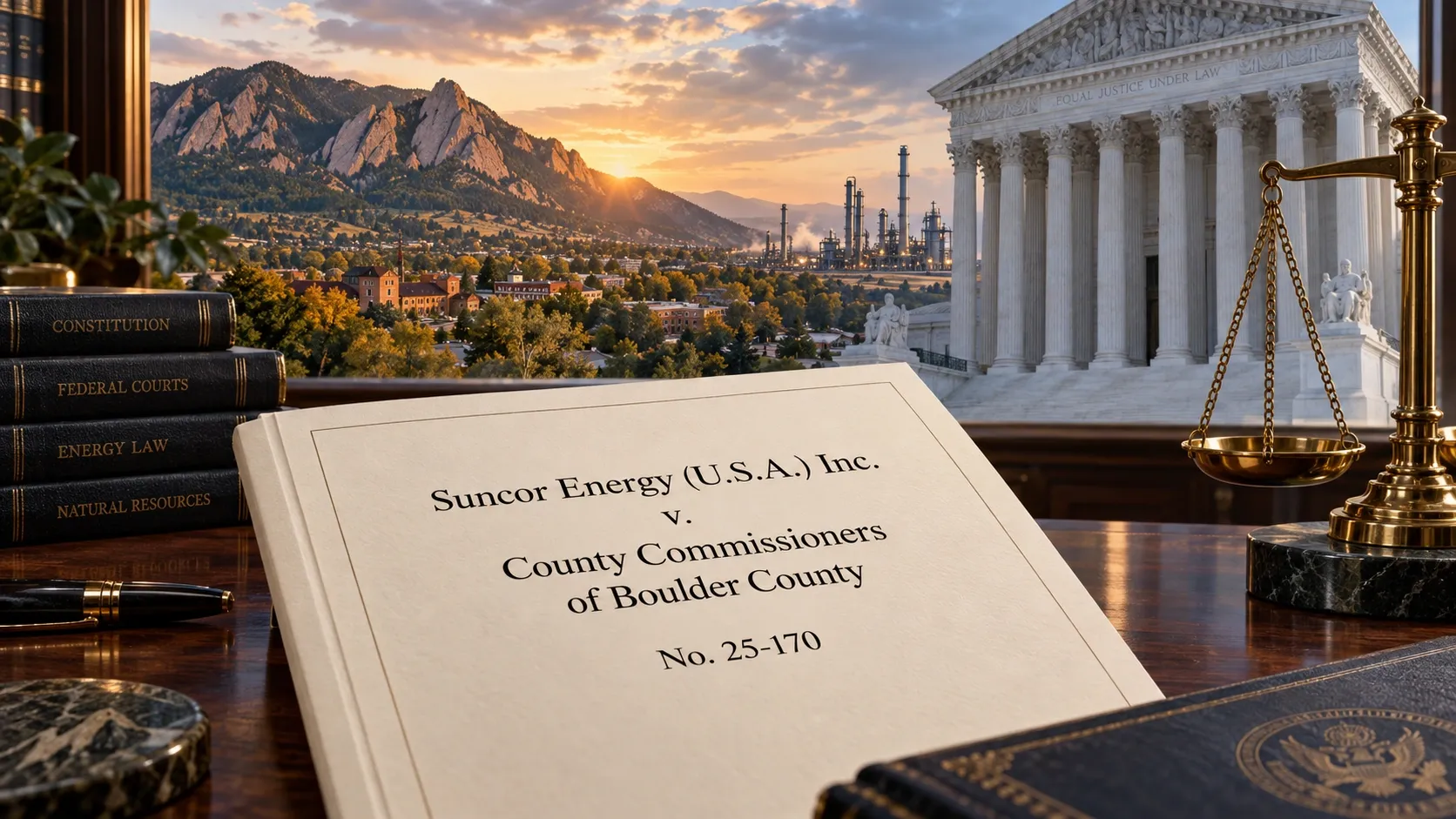
On Monday, the U.S. Supreme Court gathered not to weigh the merits of climate deception, but to decide whether the door to justice should remain open at all [1]insideclimatenews.orgSupreme Court Weighs Landmark Climate Deception Case Against Oil CompaniesThe U.S. Supreme Court heard arguments from oil companies on Monday that could help decide the fate of more than two dozen lawsuits accusing the industry of deceiving the public about climate change.Open source ↗. The case, Suncor Energy v. Boulder, pits the city and county of Boulder against energy giants ExxonMobil and Suncor Energy, testing the fragile boundary between state authority and federal preemption in an era of global climate crisis [3]business-humanrights.orgUSA: Supreme Court hears Boulder's climate lawsuit against Exxon and Suncor; companies seeking to block climate-related liabilityFacing potential liability for harms related to climate change, major oil companies have again turned to the US Supreme Court... Nearly 60 state and local governments have brought similar suits seeking billions of dollars from fossil fuel…Open source ↗. If the Court sides with the oil companies, it could shut down dozens of similar lawsuits seeking billions in damages for local harms caused by global emissions [4]apnews.comSupreme Court hears Boulder bid to sue Exxon and Suncor over climate costsThe Supreme Court grappled Monday with whether local governments can sue oil and gas companies in state court to help cover costs associated with climate change, an issue with potentially billions of dollars at stake.Open source ↗. If Boulder prevails, its case can proceed, though that would not mean it ultimately wins; energy-industry advocates warn that such litigation could bankrupt firms and drive up gas prices [8]msn.comEnergy experts warn that a ruling allowing such litigation could bankrupt oil firms and drive up gas prices nationwideEnergy experts warn that a ruling allowing such litigation could bankrupt oil firms and drive up gas prices nationwide by exposing the entire energy supply chain to liability.Open source ↗.
The dispute is not about regulating emissions; it is about who bears the cost when those emissions cause disasters. Boulder argues that its lawsuit is a traditional tort claim for deception and resulting local damages, pointing to disasters like the 2021 Marshall Fire, which destroyed nearly 1,100 homes and left two people dead and came years after the suit was filed, as examples of the financial burden on local communities [2]denverpost.comSupreme Court grapples with Boulder's climate change lawsuit against oil and gas companiesThe Supreme Court grappled Monday with whether local governments can sue oil and gas companies in state court to help cover costs associated with climate change, an issue with potentially billions of dollars at stake.Open source ↗. The oil companies counter that allowing such litigation effectively permits local jurisdictions to regulate global conduct, creating a patchwork of conflicting policies that undermines federal authority under the Clean Air Act and the Constitution [1]. This is the core tension: can a state court hold a global industry accountable for diffuse harms, or does federal law preempt such efforts entirely?
The Legal Framework and Preemption Arguments
The legal question before the Court is fundamentally about jurisdiction and the separation of powers between state and federal governments. Boulder filed its lawsuit in 2018, alleging that ExxonMobil and Suncor knowingly contributed to climate change while misleading the public about the risks associated with fossil fuels [9]wfmd.comIt's about controlling these companies and stopping the use of hydrocarbonsIt's about controlling these companies and stopping the use of hydrocarbons. The Supreme Court heard arguments Monday in Suncor v.Open source ↗. The municipalities seek damages to help cover costs imposed by climate-related extreme weather; the 2021 Marshall Fire, which caused an estimated $2 billion in damage, is cited as an example of that burden [2].
Oil companies and their legal counsel have argued that the Clean Air Act preempts any state-law claims tied to climate pollution. Kannon Shanmugam, arguing for Exxon and Suncor, stated that the case represents an unprecedented effort to use state law to regulate global conduct [1]. He warned that if Boulder’s claims are allowed to proceed, some 90,000 municipalities across the country could impose catastrophic damages on selected fossil fuel producers, effectively making national and international energy policy through jury verdicts [1]. The defendants contend that greenhouse gas emissions are a global phenomenon that cannot be unmixed or traced to specific sources in a way that allows one state to impose liability for actions occurring elsewhere [7]msn.comSupreme Court to weigh energy companies' bid to end climate-change suitThe Supreme Court will hear arguments Monday over a bid by Exxon Mobil and Suncor Energy to block a lawsuit filed by the city of Boulder.Open source ↗.
The Trump administration has intervened in the case, supporting the oil companies’ position. Principal Deputy Solicitor General Sarah Harris argued that Boulder’s case egregiously exceeds state authority by declaring Colorado a victim of actions that occurred largely out of state [4]. The administration asserts that such lawsuits undermine the federal government’s control over foreign affairs, inviting needless diplomatic friction with countries where the companies produce and sell fossil fuels [7].
Compass Predictive Analytics
Compass Predictive Analytics
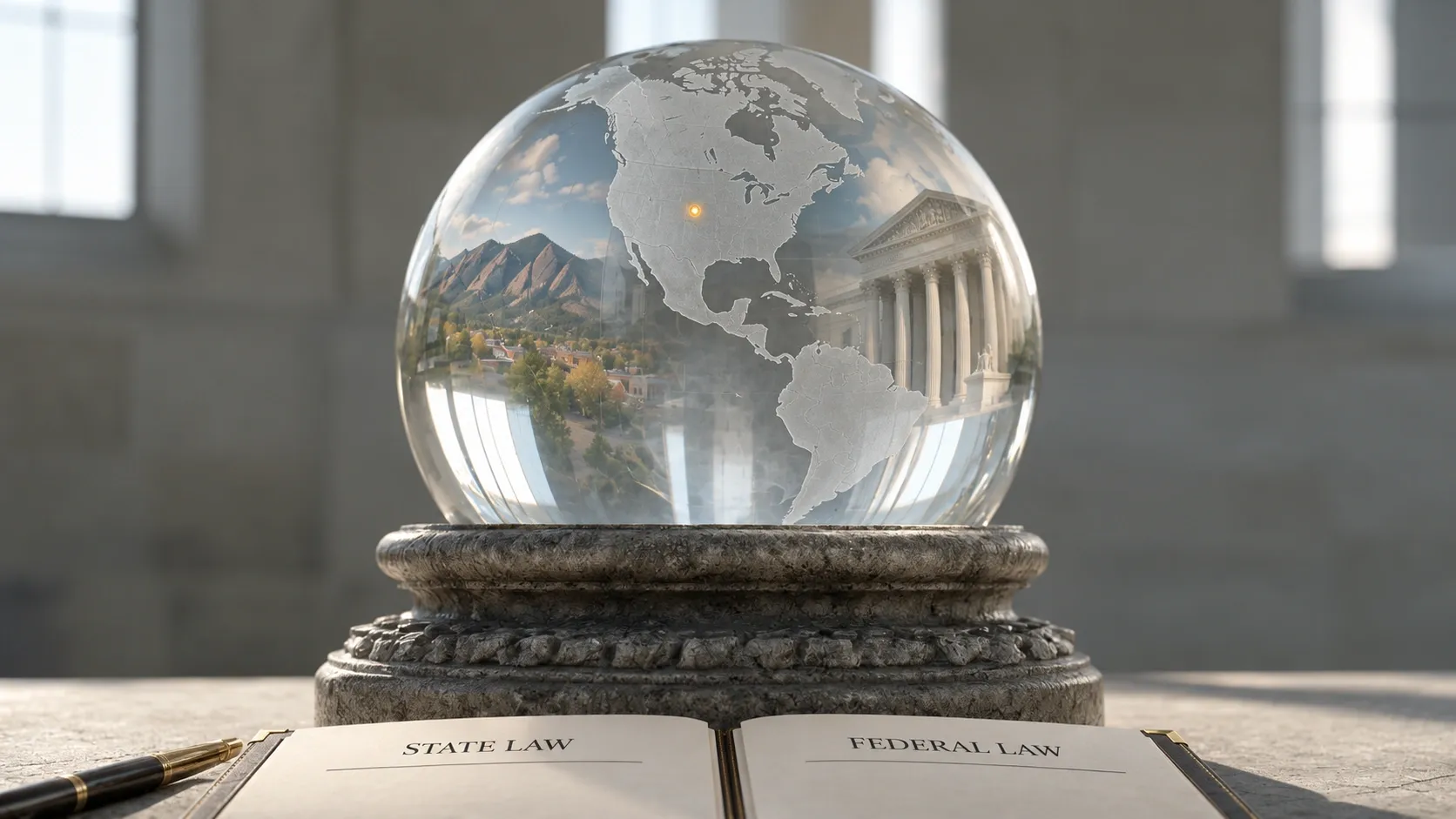
Economic Implications and Industry Response
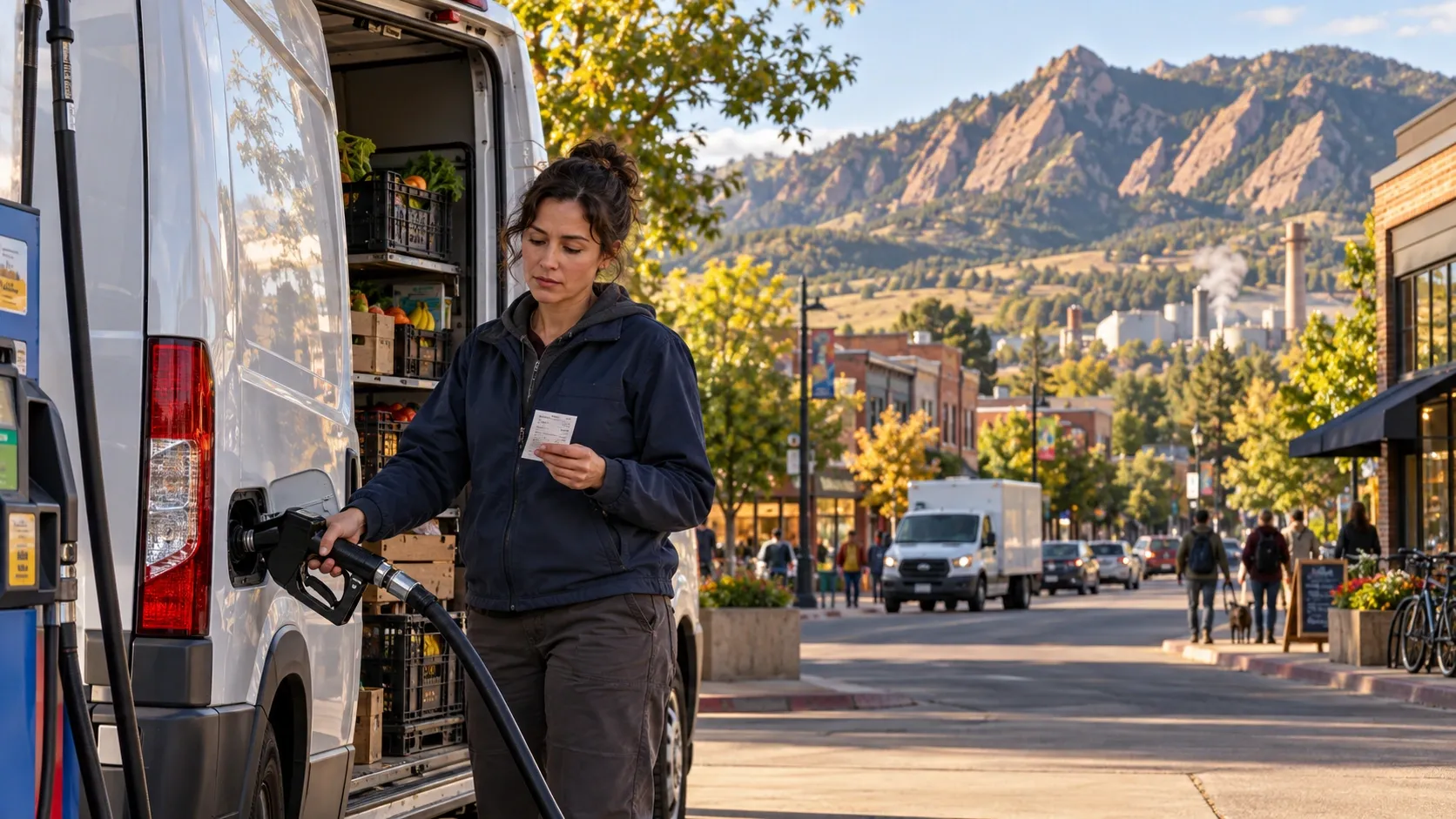
Two advocates, both speaking to Fox News Digital, have warned that a ruling allowing these climate liability claims to proceed could have severe economic consequences for the energy sector and consumers [8]msn.comEnergy experts warn that a ruling allowing such litigation could bankrupt oil firms and drive up gas prices nationwideEnergy experts warn that a ruling allowing such litigation could bankrupt oil firms and drive up gas prices nationwide by exposing the entire energy supply chain to liability.Open source ↗. Jason Isaac, CEO of the American Energy Institute, stated that a victory for Boulder would bring a "mass exodus" that would create more scarcity of fuel and higher prices [8]. He described the litigation as being about controlling oil companies and stopping the use of hydrocarbons [9].
The potential scope of liability is a central concern for industry representatives. O.H. Skinner, executive director of the Alliance for Consumers, argued that the lawsuits are an attempt to accomplish through courts what climate advocates have failed to achieve through Congress, specifically by imposing a backdoor carbon tax or bankrupting the energy industry [9]. Skinner noted that the definition of who contributes to climate change is broad, potentially exposing businesses across the entire energy supply chain, including gas stations, automakers, and utilities, to similar lawsuits [8].
Justice Brett Kavanaugh questioned whether virtually any manufacturer or business could face similar claims, saying a win by Boulder could bankrupt the oil companies and other potential defendants [4]. Isaac also argued that the case differs from tobacco or opioid suits because emissions come from countless sources around the world, making responsibility for climate damage difficult to isolate [9].
Compass Predictive Analytics
Judicial Dynamics and Jurisdictional Hurdles
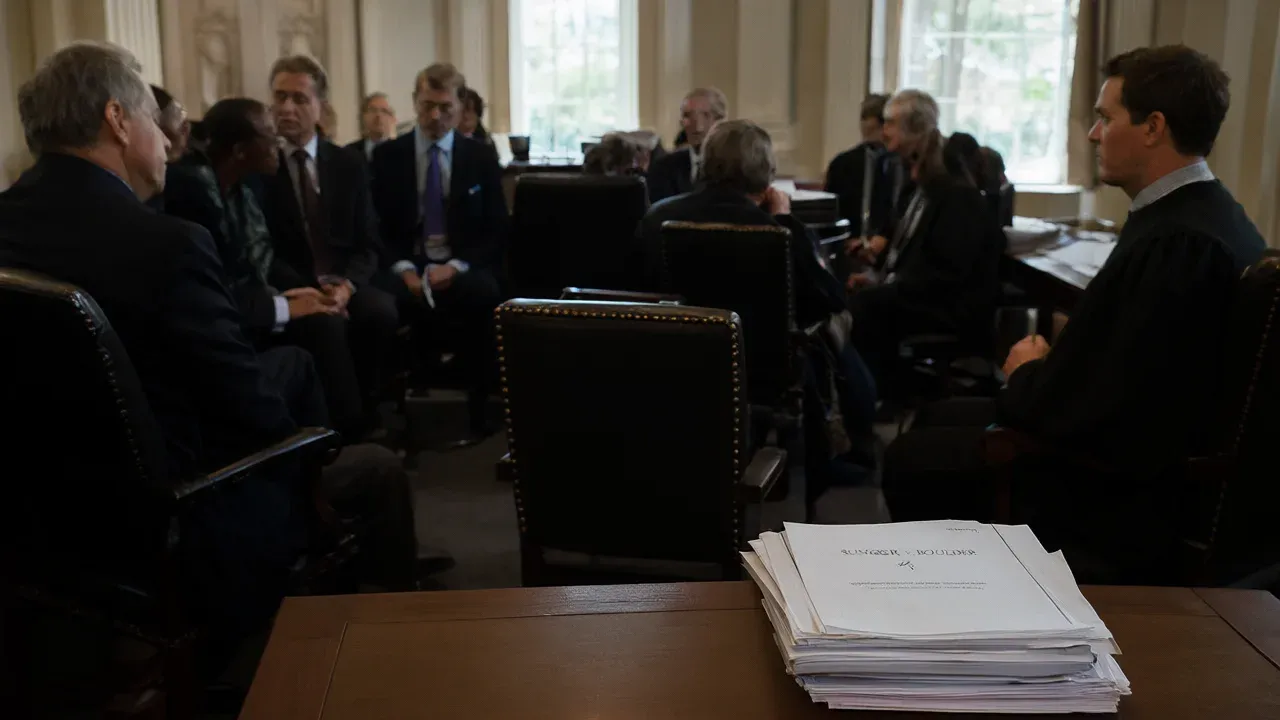
The Supreme Court’s proceedings were marked by complex jurisdictional questions and notable absences. Pressed by Justice Clarence Thomas on whether the legal theory could expose businesses beyond oil producers to similar lawsuits, Boulder's attorney Kevin Russell acknowledged that nothing in their theory prevents that, though he noted that state tort law could impose additional limitations [8].
Alito stepped aside without providing an explanation, following calls from environmental advocates who pointed to his ownership of stock in oil companies [5]yahoo.comBoulder, fossil fuel companies face off at the Supreme Court in high-stakes climate caseAttorneys representing two Colorado local governments are set for a high-stakes legal showdown over climate change Monday at the U.S. Supreme Court... Boulder's suit is one of more than 30 similar cases filed to date by state and local…Open source ↗. His absence leaves open the possibility of a tie vote, which would leave the Colorado Supreme Court’s decision allowing the case to proceed in place [4]. This scenario creates uncertainty, as a deadlock would not establish nationwide precedent but would allow Boulder’s lawsuit to move forward toward trial [8].
Several justices expressed skepticism about the timing and scope of the case. Chief Justice John Roberts questioned how the legal theory would work on the ground if every municipality in the country filed similar lawsuits [4]. Justice Ketanji Brown Jackson suggested that the Court might wait to hear all claims once state courts are done, viewing this as a potential off-ramp from deciding the substantive issues prematurely [4]. Michael Gerrard, faculty director at the Sabin Center for Climate Change Law at Columbia University, noted that Boulder’s best shot might lie in arguing that the case is too early for Supreme Court intervention [1].
Compass Predictive Analytics
Analysis of Broader Implications
The Suncor v. Boulder case represents a critical juncture for climate litigation in the United States. The outcome will determine whether state courts remain viable forums for holding fossil fuel companies accountable or if federal law will preempt such claims entirely. If the Supreme Court rules in favor of the oil companies, it could shut down dozens of similar cases filed by states and local governments [4]. Many of the cases brought by states and local governments have been paused pending the ruling, which could bring those claims to an abrupt halt [1]insideclimatenews.orgSupreme Court Weighs Landmark Climate Deception Case Against Oil CompaniesThe U.S. Supreme Court heard arguments from oil companies on Monday that could help decide the fate of more than two dozen lawsuits accusing the industry of deceiving the public about climate change.Open source ↗.
Conversely, a ruling that allows the case to proceed could open Pandora’s box for widespread litigation. Jason Isaac warned that there are over 90,000 levels of government in the United States that could potentially begin lawsuits against energy companies [8]. Isaac argued that the cost of defending such claims would be astronomical, driving up costs for consumers [8]msn.comEnergy experts warn that a ruling allowing such litigation could bankrupt oil firms and drive up gas prices nationwideEnergy experts warn that a ruling allowing such litigation could bankrupt oil firms and drive up gas prices nationwide by exposing the entire energy supply chain to liability.Open source ↗.
The case also highlights the tension between local accountability and federal regulatory authority. Boulder officials argue that states have long had the power to provide tort remedies for injuries occurring within their borders, even when the conduct causing those injuries occurred elsewhere [9]. They contend that climate change is a global problem but that its harms are experienced locally, justifying local legal responses [7].
The political dimension of the case cannot be ignored. The Trump administration's support for the oil companies comes as it has rolled back environmental regulations, including a recent Environmental Protection Agency move to repeal limits on power plant emissions [4]apnews.comSupreme Court hears Boulder bid to sue Exxon and Suncor over climate costsThe Supreme Court grappled Monday with whether local governments can sue oil and gas companies in state court to help cover costs associated with climate change, an issue with potentially billions of dollars at stake.Open source ↗. Meanwhile, Boulder has received support from a diverse coalition including climate advocacy groups, academics, and former EPA officials appointed by Republican presidents [1].
Compass Predictive Analytics
Conclusion
The Supreme Court’s decision in Suncor v. Boulder will likely define the limits of state power in addressing climate change through litigation. While the immediate legal question concerns preemption and jurisdiction, the broader implications touch on economic stability, federalism, and corporate accountability. Energy experts warn that allowing such claims to proceed could bankrupt oil firms and send gas prices soaring [8]. The stakes are high for both the energy industry and the communities seeking redress for climate-related damages.
The case serves as a test of whether the judiciary will allow state tort law to address global environmental challenges or if it will defer to federal authority. If the Court divides evenly, the lower court’s decision stands, allowing Boulder’s lawsuit to proceed but without setting a binding national precedent [4]. This outcome would leave the legal landscape fragmented, with some states permitting such claims and others not.
Ultimately, the resolution of this case will depend on how the justices balance the desire for local accountability against the risks of regulatory chaos and economic disruption. The decision will signal whether state courts remain open avenues for climate justice or if they are effectively closed by federal preemption.
Compass Predictive Analytics