Listen to this article
Narrated by Charlotte · The Noble House

The Anatomy of a Meteorological Anomaly
Atmospheric pressure plummeted over eastern Iowa on the afternoon of August 11, 2026, creating a vacuum that pulled ears tight and whistled through window frames before the wind arrived. The sky inverted, turning from gray to a bruised black as the leading edge of the storm collapsed inward rather than approaching. When the wall of air hit, it did not rain; it pulverized. A continuous band of severe weather carved a violent path from eastern Iowa through northern Illinois and Chicago, extending into northern Indiana, Ohio, Kentucky, West Virginia, and Pennsylvania [1]cbsnews.comDeadly storms and tornadoes slam Midwest, leaving hundreds of thousands without powerOpen the source to inspect the supporting evidence.Open source ↗. The event’s significance lies not only in its immediate destruction but in its demonstration that hurricane-force winds and widespread power failures can overwhelm emergency response capabilities, necessitating a shift from reactive management to proactive resilience.
Compass Predictive Analytics
Verified Casualties and Immediate Human Impact
Three deaths were confirmed in the aftermath of the storm, a figure that initially emerged from fragmented reports before being consolidated by major news outlets [7]foxweather.comAt least 2 killed as powerful derecho lashes millions in the MidwestOpen the source to inspect the supporting evidence.Open source ↗. One of the victims was a four-year-old boy, a detail that underscored the indiscriminate nature of the disaster’s impact on families and children. The confirmation of multiple fatalities across the affected states shifted the narrative from property damage to a humanitarian crisis, prompting urgent calls for safety and awareness. Emergency services were overwhelmed by the volume of distress calls, ranging from people trapped in collapsed structures to those stranded by downed power lines and fallen trees. The psychological toll on survivors was significant, as the suddenness of the storm left little time for preparation or evacuation. Communities that had previously relied on the relative safety of the Midwest climate found themselves grappling with the reality of extreme weather events that could strike without warning, fundamentally altering their perception of local safety standards.
Compass Predictive Analytics

Infrastructure Collapse and Power Grid Failure
Over one million customers lost power at the height of the storm, a staggering number that reflected the widespread nature of the wind damage. By early Wednesday, August 12, more than 700,000 customers remained without electricity, indicating that restoration efforts would be protracted and complex. The impact was particularly severe in the Quad Cities region of Iowa, where over 20,000 people were left without power, straining local resources and highlighting the fragility of regional grid connections. In Illinois, Indiana, and Ohio, the outage figures were equally daunting, with hundreds of thousands of households and businesses cut off from essential services. The loss of power disrupted communication networks, halted transportation systems, and compromised refrigeration for food and medicine, creating secondary crises for those already dealing with physical damage. The scale of the outage demonstrated that modern infrastructure, while robust in design, remains vulnerable to simultaneous, widespread physical stressors that exceed engineering tolerances. The magnitude of the power loss, with hundreds of thousands still in the dark days after the event, signaled a long road to recovery for the region [1]cbsnews.comDeadly storms and tornadoes slam Midwest, leaving hundreds of thousands without powerOpen the source to inspect the supporting evidence.Open source ↗.
Compass Predictive Analytics

Meteorological Dynamics and Wind Intensity
Winds nearing 100 miles per hour were recorded, with hurricane-force gusts exceeding 90 mph documented in parts of Chicago. These sustained high-velocity winds created a pressure differential that ripped roofs from buildings and tore limbs from mature trees, leaving a landscape of debris that further hampered recovery efforts. In Columbus, Ohio, gusts over 80 mph were observed, contributing to the widespread structural damage reported across the state. A 300-mile-long stretch of the Midwest experienced winds over 75 mph, creating a continuous corridor of destruction that mirrored the storm’s path. The intensity of the winds was not uniform but peaked in specific areas, causing localized catastrophic damage while leaving adjacent zones with lighter impacts. This variability in wind speed made the storm particularly dangerous, as residents could not rely on a consistent warning threshold for safety. The meteorological conditions that fueled the derecho, including strong upper-level winds and instability, created a perfect storm for a long-lived, fast-moving convective system that defied traditional forecasting models. The wind speeds, which approached hurricane force in key urban centers, were a primary driver of the extensive structural damage observed [3]nytimes.comPowerful ‘Derecho’ Storms Tear Through MidwestOpen the source to inspect the supporting evidence.Open source ↗.
Compass Predictive Analytics
Tornado Genesis and Localized Destruction
One notable tornado flipped a car near Columbus, Ohio, illustrating the localized but severe damage that can occur even within a broader wind event. Other tornado reports emerged across northern Illinois and northwest Indiana, requiring emergency responders to divert resources from wind damage mitigation to search and rescue operations. The presence of tornadoes within a derecho is not uncommon, as the strong updrafts and wind shear within the storm system can initiate rotation. However, the unpredictability of tornado formation made it difficult for the public to distinguish between the general wind threat and specific, concentrated dangers. Emergency alerts had to be updated frequently to reflect the evolving threat landscape, causing alert fatigue among residents who were already overwhelmed by the sheer volume of information. The combination of wind and tornado damage created a chaotic environment where physical hazards were numerous and constantly shifting, complicating efforts to assess safety and begin repairs. The tornadoes spawned by the storm added a deadly dimension to the already severe weather conditions [5]accuweather.comDerecho unleashes 90 mph winds, spawns tornadoes in MidwestOpen the source to inspect the supporting evidence.Open source ↗.
Compass Predictive Analytics
Geographic Scope and Regional Vulnerability
The storm moved from eastern Iowa across northern Illinois and Chicago, a major metropolitan hub, into northern Indiana, demonstrating how urban centers can be disproportionately affected by extreme weather. Impacts extended into Ohio, Kentucky, West Virginia, and Pennsylvania, showing that the storm’s influence was not confined to a single state but spanned multiple political and administrative boundaries. This cross-state impact created challenges for coordinated response efforts, as different regions had varying levels of preparedness and resources. The storm’s trajectory also highlighted the role of topography and urban density in amplifying damage, as tall buildings in Chicago acted as wind tunnels, increasing local wind speeds and causing structural stress. The widespread nature of the event required a regional approach to disaster management, emphasizing the need for shared resources and communication protocols among neighboring states. The derecho served as a stark reminder that weather events do not respect political borders, and effective response requires cooperation across jurisdictions. The storm’s path, which caused widespread damage and fatalities, underscored the regional scale of the threat [2]apnews.comDeaths, damage reported as severe weather spawns tornadoes, flash flooding in the MidwestOpen the source to inspect the supporting evidence.Open source ↗.
Compass Predictive Analytics
Structural Damage and Environmental Aftermath
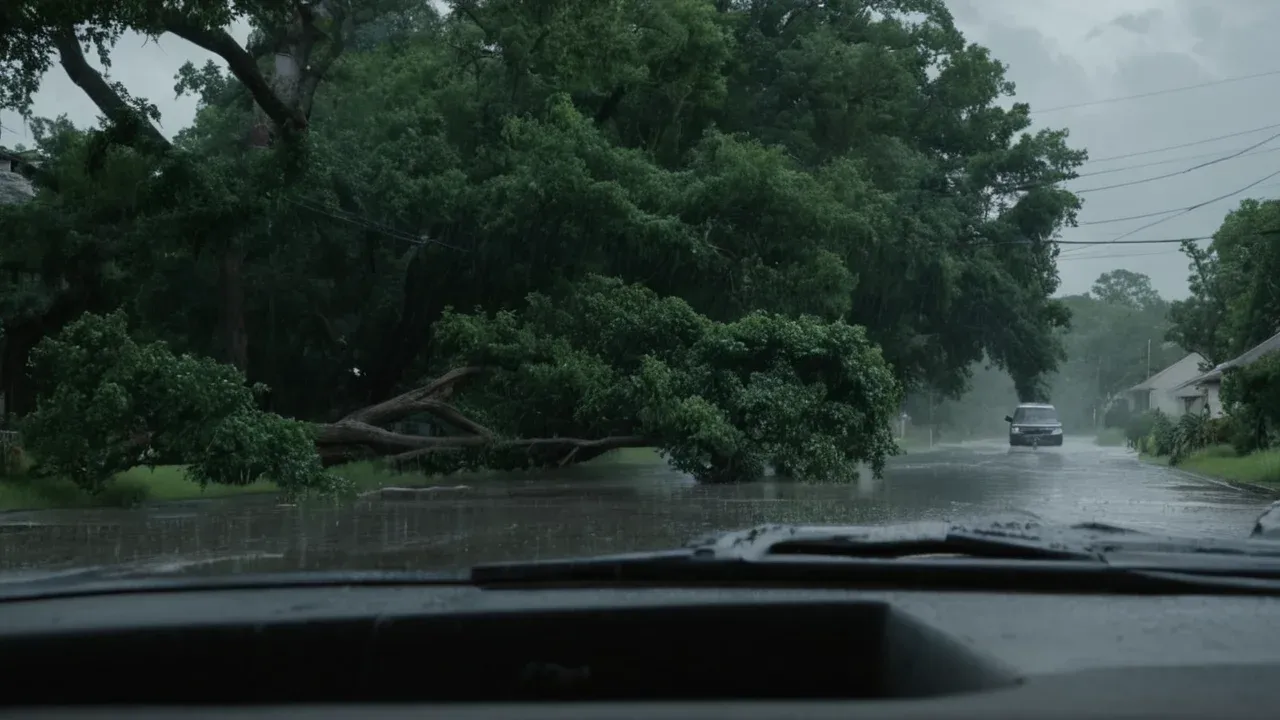
An estimated 12,000 trees were downed in the Chicago area alone, creating a massive cleanup challenge and posing ongoing safety risks from unstable branches. The loss of tree cover not only aestheticized the urban environment but also reduced natural barriers against future wind events, potentially exacerbating future damage. In Indiana, catastrophic flooding was ongoing, as the storm’s heavy rains overwhelmed drainage systems and riverbanks. The combination of wind and water damage created a dual threat that complicated recovery efforts, as residents had to deal with both structural instability and water intrusion. The environmental impact was significant, with debris from downed trees and damaged buildings contaminating waterways and disrupting local ecosystems. The sheer volume of debris required coordinated disposal efforts, straining municipal waste management systems and highlighting the logistical challenges of post-disaster cleanup. The environmental aftermath of the derecho would linger for months, requiring sustained attention to restore ecological balance and public safety. The sheer volume of power outages, affecting over a million customers, was a direct result of this widespread structural and environmental damage [8]cnn.comRelentless storms leave at least 1 dead, over a million without power across Midwest and Mid-AtlanticOpen the source to inspect the supporting evidence.Open source ↗.
Compass Predictive Analytics
Emergency Response and Community Resilience
Towns like Maquoketa, Iowa, activated emergency management protocols to address immediate needs and plan for long-term recovery. Emergency services responded to numerous reports of tornadoes and flooding incidents, working around the clock to save lives and protect property. The response effort was characterized by a mix of professional responders and volunteer community members, demonstrating the resilience of local populations in the face of adversity. However, the scale of the disaster tested the limits of local capacity, prompting calls for state and federal assistance to support recovery. The declaration of disaster periods was a critical step in unlocking funding and resources, but it also highlighted the gaps in pre-disaster preparedness that left communities vulnerable. The experience of the derecho underscored the importance of robust emergency planning, regular drills, and public education to enhance community resilience against future extreme weather events. The response efforts were further complicated by the sheer number of people left without power, making communication and coordination difficult for both responders and residents [6]desmoinesregister.comMidwest-sprawling derecho leaves thousands of Iowans without powerOpen the source to inspect the supporting evidence.Open source ↗.
Compass Predictive Analytics
Analysis of Rare Event Classification
Meteorological experts noted that while derechos occur periodically, the specific combination of wind speeds, geographic reach, and structural damage observed in this event placed it in a rare category. The rarity of the event was not just a technical classification but a reflection of its deviation from historical norms for the region. This deviation raised questions about the changing climate and the increasing frequency of extreme weather events, prompting discussions about long-term adaptation strategies. The analysis of the derecho’s rarity was crucial for understanding its significance and for informing future policy decisions regarding infrastructure resilience and emergency preparedness. By categorizing the event as rare, experts emphasized the need for heightened awareness and investment in mitigation measures to protect against similar future occurrences. The rarity of the event served as a warning sign, indicating that the Midwest may be entering a new phase of weather volatility that requires proactive response rather than reactive management. The winds that reached nearly 100 mph were a key factor in this classification, as such speeds are exceptional for the region [3]nytimes.comPowerful ‘Derecho’ Storms Tear Through MidwestOpen the source to inspect the supporting evidence.Open source ↗.
Concluding Assessment and Future Implications
The derecho of August 11, 2026, stands as a defining moment in the recent history of the Midwest, exposing the fragility of urban infrastructure and the human cost of extreme weather. The confirmed fatalities, widespread power outages, and extensive structural damage illustrate the urgent need for improved resilience strategies. The storm’s rare intensity and geographic scope demanded a coordinated regional response, yet also revealed gaps in preparedness that must be addressed. As communities begin the long process of recovery, the lessons learned from this event must inform future planning, from upgrading electrical grids to enhancing early warning systems. The derecho was not an isolated incident but a symptom of broader climatic shifts that require sustained attention and investment. By acknowledging the severity of the event and the vulnerability it exposed, policymakers and citizens can work together to build a more resilient future. The path forward requires not just reconstruction but transformation, ensuring that the Midwest is better prepared for the challenges of a changing climate. The decisive action now is to integrate these lessons into long-term strategy, ensuring that future storms are met with preparedness rather than surprise. The legacy of this event will be measured not by the damage it caused, but by the strength of the response and the durability of the reforms it inspires. The widespread nature of the power outages, affecting over a million people, highlights the critical need for hardening the electrical grid against such extreme events [4]edition.cnn.comMidwest battered by rare derechoOpen the source to inspect the supporting evidence.Open source ↗.