
Listen to this article
Narrated by Charlotte · The Noble House

Chronology of Strikes and Casualty Assessment
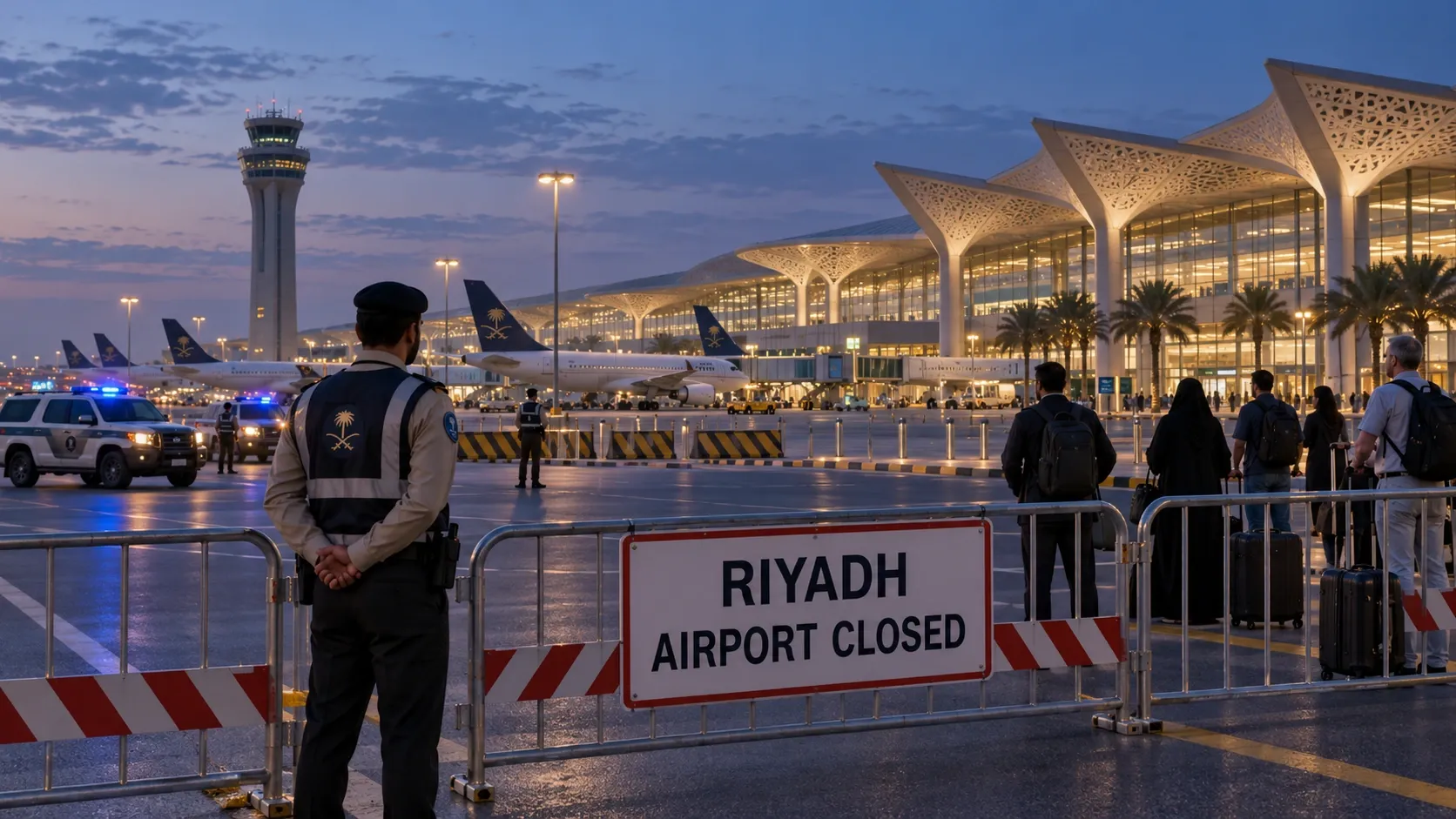
The deadliest blow of the Riyadh airport crisis was the physical shattering of Terminal 3. On Saturday, October 10, 2026, a Houthi projectile struck King Khalid International Airport, collapsing part of the ceiling in a departure hall and sending passengers running through debris-strewn ground [1]bbc.co.ukWatch: The scene at Riyadh international airport after strikeOne person has been killed and 11 injured in a second strike on the international airport in the Saudi capital Riyadh, officials have said.Open source ↗[4]airlive.netIncident ongoing at King Khalid's International AirportIncident ongoing at King Khalid's International Airport, report of a missile striking Terminal 3.Open source ↗. The blast killed at least 12 people and injured more than 300 others; the dead included citizens of Saudi Arabia, Bangladesh, the US, Egypt, Jordan, Syria, Palestine, and Sudan [5]uk.news.yahoo.comA projectile struck a passenger terminal at the international airport in RiyadhA projectile struck a passenger terminal at the international airport in Riyadh on Sunday, a day after a missile hit the same building and killed at least 12 people.Open source ↗. One American citizen was confirmed dead by US Secretary of State Marco Rubio, while an Indian national succumbed to injuries the following day [1]. The attack was the deadliest on Saudi soil in more than a decade, a sharp escalation in the Yemen war [2]nationalpost.comA fresh Houthi strike hit Riyadh's international airportA fresh Houthi strike hit Riyadh's international airport on Sunday, a day after another attack claimed by the Yemeni group killed at least a dozen people and forced authorities to suspend operations at the facility.Open source ↗[6]rnz.co.nzRisk of wider conflict after Riyadh strikeA fresh Houthi strike hit Riyadh's international airport a day after another attack claimed by the Yemeni group killed at least a dozen people and forced authorities to suspend operations at the facility.Open source ↗.
This event was not an isolated incident but part of a week-long campaign of Houthi strikes on Saudi airports that exposed the limits of Saudi air defense [6]rnz.co.nzRisk of wider conflict after Riyadh strikeA fresh Houthi strike hit Riyadh's international airport a day after another attack claimed by the Yemeni group killed at least a dozen people and forced authorities to suspend operations at the facility.Open source ↗[10]cnn.comSaudi Arabia intercepts three missiles as capital's international airport remains closed after deadly Houthi attacksSaudi Arabia said it intercepted and destroyed three Houthi ballistic missiles on Monday, as the main international airport in the kingdom's capital remained closed following a series of attacks that have killed at least 20 people and…Open source ↗. The sequence began on Wednesday, October 7, when a Houthi ballistic missile struck King Khalid Airport, killing a Sudanese resident and wounding eight others [7]latintimes.comThe Briefing: A Houthi ballistic missile struck King Khalid International AirportA Houthi ballistic missile struck King Khalid International Airport in Riyadh on Wednesday, killing a Sudanese resident and wounding eight others of mixed nationalities — five Saudi citizens, two Egyptians, and one Pakistani — while a…Open source ↗. On Thursday, a second missile hit the same facility; the campaign also reached other Saudi airports, including Abha earlier in the week and Dammam on Sunday [7][2]nationalpost.comA fresh Houthi strike hit Riyadh's international airportA fresh Houthi strike hit Riyadh's international airport on Sunday, a day after another attack claimed by the Yemeni group killed at least a dozen people and forced authorities to suspend operations at the facility.Open source ↗. By Sunday, October 11, an unidentified projectile hit Terminal 4, killing one person and injuring 11 more, sparking fires that required emergency containment [3][8]english.alarabiya.netFire breaks out at Riyadh airport after projectile attackFire breaks out at Riyadh airport after projectile attack, Saudi-led coalition says.Open source ↗. The cumulative toll exceeded 20 deaths and hundreds of wounded, rendering the capital’s primary aviation hub non-operational [10]cnn.comSaudi Arabia intercepts three missiles as capital's international airport remains closed after deadly Houthi attacksSaudi Arabia said it intercepted and destroyed three Houthi ballistic missiles on Monday, as the main international airport in the kingdom's capital remained closed following a series of attacks that have killed at least 20 people and…Open source ↗.
The Houthis have explicitly framed these strikes as retaliation for Saudi military operations in Yemen, particularly airstrikes on Sanaa International Airport [5]. Security analyst Thomas Juneau says the Houthis now "want to rewrite the rules of the game": "They want to do to Saudi Arabia what Saudi Arabia does to them," he said [6]. The attacks are also expected to increase pressure on Saudi Arabia's allies, including the United States, to provide military support [5].
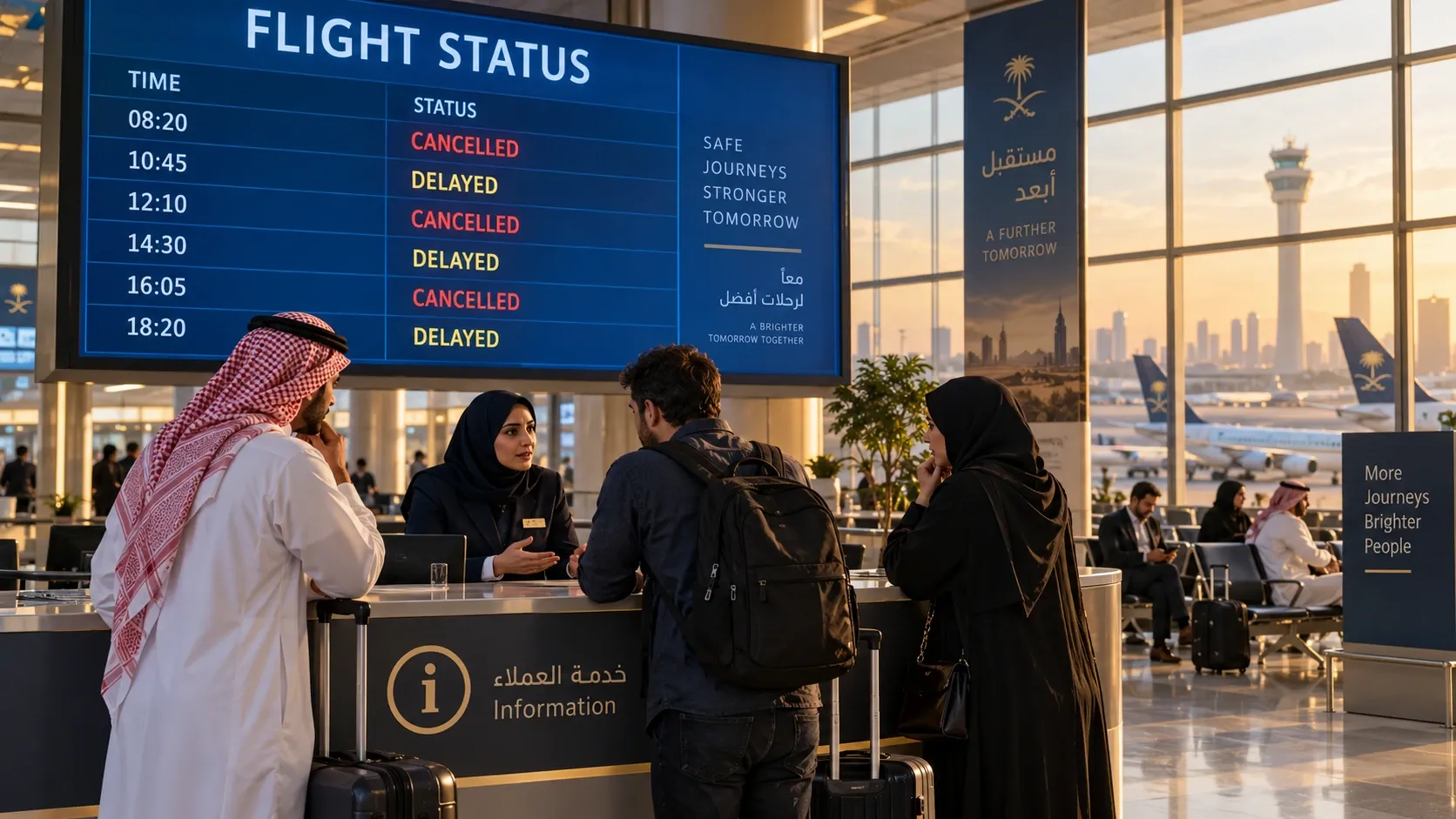
The mechanism of this escalation relies on saturation. Despite billions poured into military defense, Houthi attacks continue to slip through because Saudi Arabia is too large to consistently defend against sustained missile and drone campaigns, according to security analyst Thomas Juneau [6]. On Monday, Saudi Arabia intercepted and destroyed three additional incoming missiles, but the airport remained closed, with operations suspended indefinitely to allow for damage assessment [10]. Radar and communications equipment were damaged during the attacks, complicating efforts to resume normal operations [6]. The disruption has had a cascading effect on regional aviation, with foreign embassies advising their citizens to avoid the airport entirely [5].
Steelman belief: One might argue that Saudi Arabia’s defensive capabilities remain robust, citing the interception of multiple missiles and the rapid deployment of emergency crews. However, the repeated success of Houthi attacks suggests that current defensive measures are insufficient against sustained saturation campaigns. The fact that the airport was struck repeatedly within a week, despite active air defense systems, indicates a vulnerability that cannot be ignored [10].
Counterargument: Some analysts note that US reluctance to join Saudi strikes may reflect domestic political pressures, including November's midterm elections and public frustration with the Iran war [3][9]israelhayom.comSaudi Arabia vows retaliation after deadly Houthi strike on Riyadh airportRiyadh pledged Sunday to 'respond decisively' to Yemen's Iranian-backed Houthi rebels, a day after a deadly strike on the Saudi capital's international airport pulled the kingdom directly into the region's expanding conflict. The Houthis…Open source ↗. Riyadh has also kept diplomatic channels open, with its foreign minister speaking to his Omani counterpart about de-escalation [5]uk.news.yahoo.comA projectile struck a passenger terminal at the international airport in RiyadhA projectile struck a passenger terminal at the international airport in Riyadh on Sunday, a day after a missile hit the same building and killed at least 12 people.Open source ↗.
Rebuttal: The reality on the ground contradates this containment narrative. The Houthis have expanded their campaign beyond aviation targets to include energy infrastructure and military bases, claiming responsibility for strikes on oil facilities across the kingdom [7]. This diversification of targets indicates an effort to maximize disruption and demonstrate comprehensive reach. The threat is operational and persistent.
Compass Predictive Analytics
Operational Impact and Infrastructure Disruption
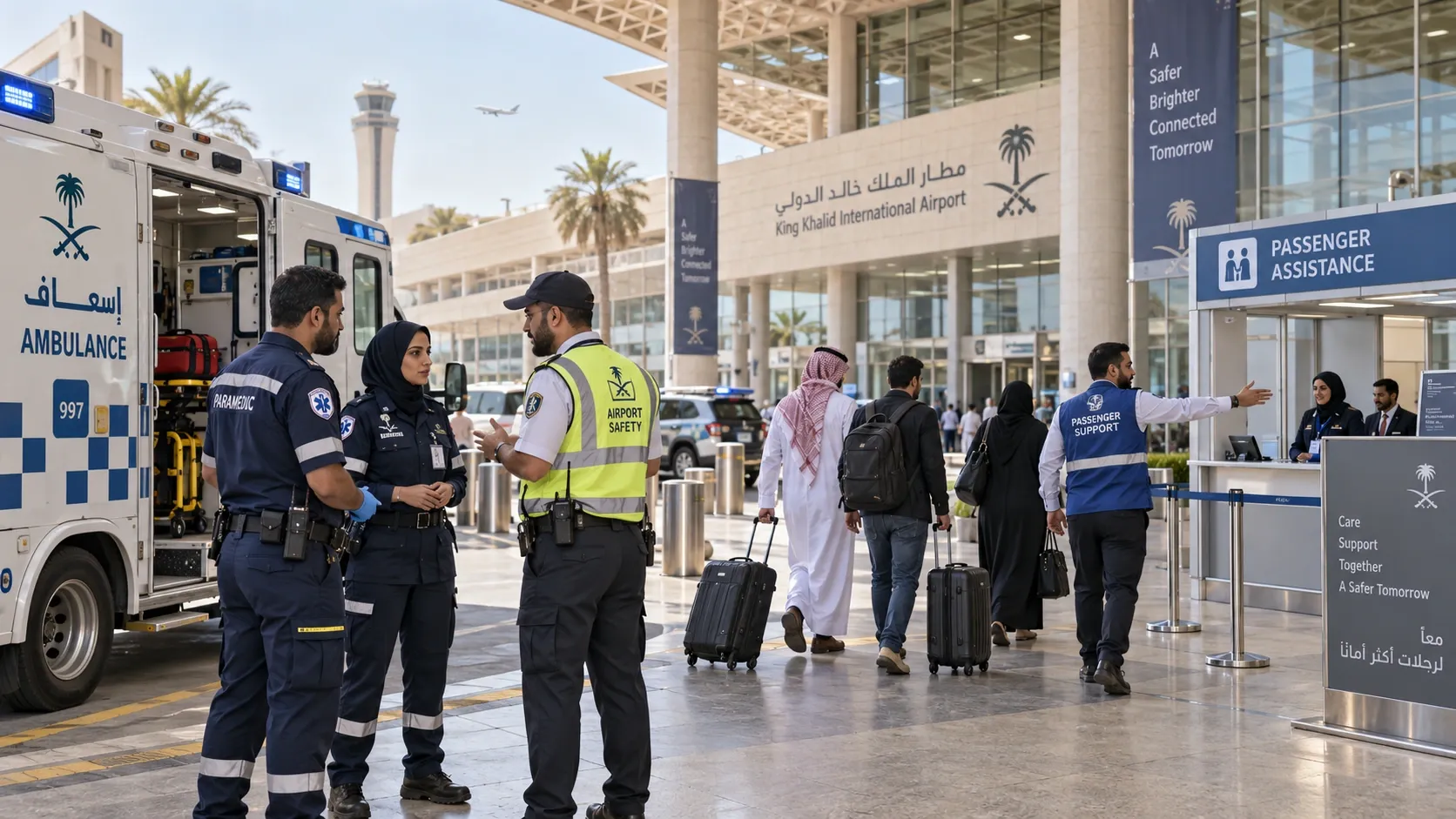
The immediate future for Saudi aviation remains uncertain. King Khalid International Airport may remain closed for an extended period, impacting economic activity and diplomatic travel [10]. The broader region faces a heightened risk of miscalculation, as the line between proxy conflict and direct state confrontation blurs. Decisive action by Riyadh and its partners will be required to restore security and prevent further escalation into a wider regional war. The current trajectory suggests that without a negotiated settlement or significant shift in Houthi strategy, the violence will continue to spread, threatening stability across the Middle East.
The geopolitical implications are profound. Saudi Arabia has vowed to respond decisively, describing the strikes as a "full-fledged war crime" [9]israelhayom.comSaudi Arabia vows retaliation after deadly Houthi strike on Riyadh airportRiyadh pledged Sunday to 'respond decisively' to Yemen's Iranian-backed Houthi rebels, a day after a deadly strike on the Saudi capital's international airport pulled the kingdom directly into the region's expanding conflict. The Houthis…Open source ↗. The kingdom has sought assistance from France, Egypt, the UK, and Pakistan to bolster its air defense capabilities, which are reportedly running low on interceptor missiles [3]. Regional allies are also mobilizing. Pakistan and Turkey committed to deploying military forces to Saudi Arabia under the Mecca pact, a trilateral mutual defense agreement signed in August 2026 [7]. This move signals a shift toward collective deterrence, aiming to prevent further escalation by demonstrating unified resolve [7].
The United States faces a complex dilemma. President Donald Trump stated that he was considering joining Saudi strikes against the Houthis, noting that the US "has communication with the Houthis" [9]. However, Washington has historically withheld direct military backing sought by Riyadh, preferring to provide intelligence and targeting support instead [9]. Direct US involvement could lead to further Houthi retaliation, potentially targeting global shipping lanes or intensifying ground operations. Conversely, failure to respond decisively may embolden Iran and its proxies to continue escalating violence against Saudi infrastructure [5].
The international community has expressed concern over the potential for wider conflict. European Commission President Ursula von der Leyen warned that attacks by Iran’s proxies are pushing the region into a spiral of violence [3]. The UK Foreign Office advised against all but essential travel to parts of Saudi Arabia, reflecting the heightened risk assessment [3]. These diplomatic responses underscore the global stakes of the escalating proxy war.
Compass Predictive Analytics
Strategic Intent and Houthi Objectives
The Houthis have explicitly stated their rationale for these attacks, framing them as retaliation for Saudi military operations in Yemen. The group claims that Saudi airstrikes on Sanaa International Airport and other targets in Houthi-controlled territory triggered the response [5]. The group has called the kingdom's transit hubs "a theatre of operations for our forces," indicating that Saudi territory is no longer treated as off-limits to its long-range capabilities [2]nationalpost.comA fresh Houthi strike hit Riyadh's international airportA fresh Houthi strike hit Riyadh's international airport on Sunday, a day after another attack claimed by the Yemeni group killed at least a dozen people and forced authorities to suspend operations at the facility.Open source ↗.
The Houthi campaign has expanded beyond aviation targets to include energy infrastructure and military bases. The group claims responsibility for strikes on oil facilities and military installations across the kingdom [7]. This diversification of targets indicates an effort to maximize disruption and demonstrate comprehensive reach. The Houthis have also warned that "the worst is yet to come" if Saudi military action in Yemen continues [3]theguardian.comRiyadh airport hit again after deadly Houthi missile attack, Saudi authorities sayUnidentified projectile strikes King Khalid airport, killing one and injuring 11, as escalating attacks threaten to draw more countries into Yemen conflict.Open source ↗.
Compass Predictive Analytics

Geopolitical Reactions and Alliance Dynamics
The immediate future for Saudi aviation remains uncertain. King Khalid International Airport may remain closed for an extended period, impacting economic activity and diplomatic travel [10]. The broader region faces a heightened risk of miscalculation, as the line between proxy conflict and direct state confrontation blurs. Decisive action by Riyadh and its partners will be required to restore security and prevent further escalation into a wider regional war. The current trajectory suggests that without a negotiated settlement or significant shift in Houthi strategy, the violence will continue to spread, threatening stability across the Middle East.
The geopolitical implications are profound. Saudi Arabia has vowed to respond decisively, describing the strikes as a "full-fledged war crime" [9]. The kingdom has sought assistance from France, Egypt, the UK, and Pakistan to bolster its air defense capabilities, which are reportedly running low on interceptor missiles [3]. Regional allies are also mobilizing. Pakistan and Turkey committed to deploying military forces to Saudi Arabia under the Mecca pact, a trilateral mutual defense agreement signed in August 2026 [7]. This move signals a shift toward collective deterrence, aiming to prevent further escalation by demonstrating unified resolve [7].
The United States faces a complex dilemma. President Donald Trump stated that he was considering joining Saudi strikes against the Houthis, noting that the US "has communication with the Houthis" [9]. However, Washington has historically withheld direct military backing sought by Riyadh, preferring to provide intelligence and targeting support instead [9]. Direct US involvement could lead to further Houthi retaliation, potentially targeting global shipping lanes or intensifying ground operations. Conversely, failure to respond decisively may embolden Iran and its proxies to continue escalating violence against Saudi infrastructure [5].
The international community has expressed concern over the potential for wider conflict. European Commission President Ursula von der Leyen warned that attacks by Iran’s proxies are pushing the region into a spiral of violence [3]. The UK Foreign Office advised against all but essential travel to parts of Saudi Arabia, reflecting the heightened risk assessment [3]. These diplomatic responses underscore the global stakes of the escalating proxy war.
Compass Predictive Analytics
Conclusion and Strategic Outlook
The immediate future for Saudi aviation remains uncertain. King Khalid International Airport may remain closed for an extended period, impacting economic activity and diplomatic travel [10]. The broader region faces a heightened risk of miscalculation, as the line between proxy conflict and direct state confrontation blurs. Decisive action by Riyadh and its partners will be required to restore security and prevent further escalation into a wider regional war. The current trajectory suggests that without a negotiated settlement or significant shift in Houthi strategy, the violence will continue to spread, threatening stability across the Middle East.
The geopolitical implications are profound. Saudi Arabia has vowed to respond decisively, describing the strikes as a "full-fledged war crime" [9]. The kingdom has sought assistance from France, Egypt, the UK, and Pakistan to bolster its air defense capabilities, which are reportedly running low on interceptor missiles [3]. Regional allies are also mobilizing. Pakistan and Turkey committed to deploying military forces to Saudi Arabia under the Mecca pact, a trilateral mutual defense agreement signed in August 2026 [7]. This move signals a shift toward collective deterrence, aiming to prevent further escalation by demonstrating unified resolve [7].
The United States faces a complex dilemma. President Donald Trump stated that he was considering joining Saudi strikes against the Houthis, noting that the US "has communication with the Houthis" [9]. However, Washington has historically withheld direct military backing sought by Riyadh, preferring to provide intelligence and targeting support instead [9]. Direct US involvement could lead to further Houthi retaliation, potentially targeting global shipping lanes or intensifying ground operations. Conversely, failure to respond decisively may embolden Iran and its proxies to continue escalating violence against Saudi infrastructure [5].
The international community has expressed concern over the potential for wider conflict. European Commission President Ursula von der Leyen warned that attacks by Iran’s proxies are pushing the region into a spiral of violence [3]. The UK Foreign Office advised against all but essential travel to parts of Saudi Arabia, reflecting the heightened risk assessment [3]. These diplomatic responses underscore the global stakes of the escalating proxy war.